Beginner diving experiences for First Ocean Dives
Planning a first ocean dive in Punta Cana? This guide to beginner diving experiences explains safety, comfort, and what your first descent feels like now.
The moment your face enters the water, the Caribbean becomes surprisingly quiet. Your breathing sounds louder, colors look sharper, and a reef that seemed far below from the boat begins to feel close enough to touch. For travelers searching beginner diving experiences, that first sensation is often paired with one question: “What if I get nervous?” The answer is simple: nerves are normal, and the right instructor, pace, and conditions turn uncertainty into a safe adventure under the water.
A first scuba experience should never feel rushed or crowded. It should feel like a guided introduction to a new environment, with time to learn the basics, settle your breathing, and enjoy the marine life around Punta Cana.
The most common beginner diving scenarios
Most first-time divers do not struggle with the physical side of scuba diving. They are usually surprised by how comfortable it can be once they understand a few key sensations. The common situations below are not warning signs that diving is “not for you.” They are normal parts of learning to move and breathe underwater.
“I’m worried I won’t know how to breathe”
Scuba breathing feels unusual on the surface because you are inhaling and exhaling through a regulator rather than your nose and mouth as usual. Underwater, though, many beginners relax quickly once they focus on slow, full breaths.
There is no need to breathe deeply in an exaggerated way. A calm inhale, a calm exhale, and a steady rhythm are enough. Your instructor will give you time in shallow water to practice before the dive begins. You will also learn that the regulator keeps delivering air when you inhale, so you do not need to bite down hard or force your breathing.
If water touches your mask or you need a moment to reset, you can signal your guide. Good beginner instruction is built around pauses. You are not expected to perform perfectly on your first try.
“My ears feel pressure as I go down”
Pressure in the ears is one of the most common sensations during descent. It is also easy to manage when you descend slowly and equalize early. Equalizing means gently balancing the pressure in your ears, often by pinching your nose and blowing softly or swallowing.
The key is never to force it. If your ears do not clear, you simply stop, rise a little, and try again. A professional guide watches closely during the first few feet because this is where beginners need the most reassurance.
Do not dive if you are congested from a cold, sinus infection, or severe allergies. Trying to push through congestion can make equalizing uncomfortable and spoil an otherwise beautiful day on the reef. It is always better to reschedule than to force a descent.
“What if I feel anxious underwater?”
Anxiety usually appears before the dive, not after you have settled into it. The boat ride, the equipment, and the idea of breathing underwater can make the experience feel bigger than it is. Once you are neutrally buoyant and moving slowly over a reef, the focus often shifts to parrotfish, sea fans, and the soft movement of the water.
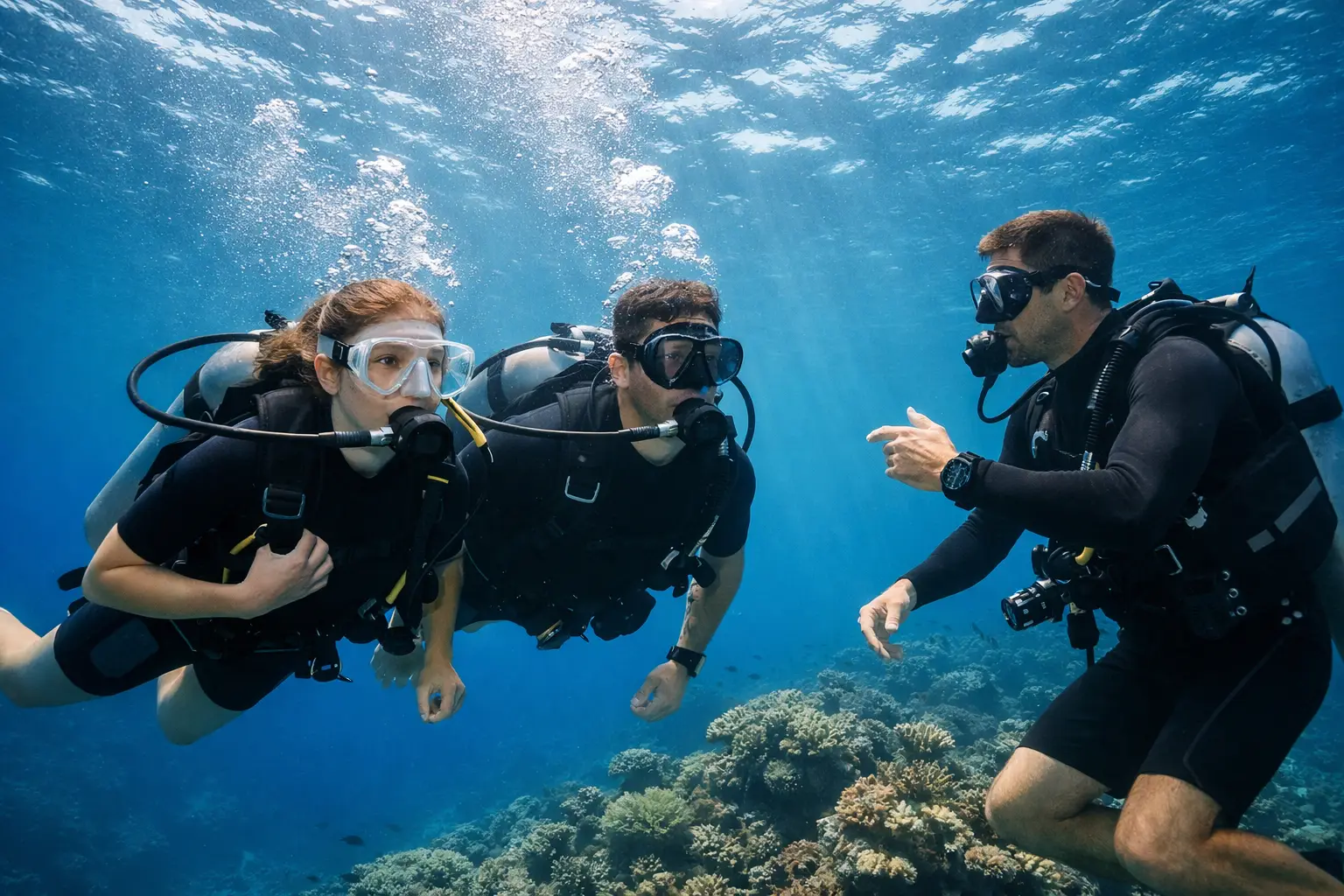
Still, you always remain in control. You can communicate with hand signals, stay close to your instructor, pause, or end the dive if you choose. There is no prize for going deeper or staying longer than you feel comfortable.
Small groups make a real difference here. In a group of four divers or fewer, an instructor can recognize when someone needs a slower descent, another mask adjustment, or a quiet moment at the surface. This personal attention is especially valuable for couples or families where one person feels ready immediately and another needs more time.
“Will I sink, float, or lose control?”
Buoyancy is the skill that makes scuba diving feel almost weightless. At first, beginners may feel too buoyant at the surface or notice that they need a few minutes to find a comfortable position underwater. That is completely expected.
Your guide adjusts the amount of air in your buoyancy control device and helps you find the right weighting. Once you are underwater, small changes in breathing affect your position: inhaling lifts you slightly, and exhaling lets you settle gently. You do not need to master this immediately. On a first dive, the goal is simply to stay relaxed, move slowly, and follow your instructor.
Avoid using your hands to swim constantly. Slow fin kicks and a horizontal body position help conserve energy and protect the reef below you.
Beginner diving experiences: choose the right first experience
Not every diving activity is designed for the same starting point. If you have never dived before and want to experience the ocean during your vacation, a supervised introductory dive is usually the best fit. You receive a safety briefing, learn essential skills in shallow water, and dive alongside a certified professional. No previous certification is required for this type of experience.
If you want to dive independently on future trips, join boat dives with a buddy, or develop your skills over several days, an entry-level PADI certification course is the better option. It requires more time and practice, but it gives you a foundation you can use around the world.
The best choice depends on your vacation schedule and your goal. An introductory dive is ideal if you want a memorable first look at the Caribbean reef. A course is worth considering if that first look has already become a new passion.
For children, the decision also depends on age, comfort in the water, and the program available. A child-friendly experience such as Bubblemaker is not simply an adult dive made smaller. It is adapted to help young participants explore with close supervision and age-appropriate limits.
What a safe first dive should include
Before committing to any beginner scuba activity, look beyond the photos of clear blue water. Ask how the operator manages the experience from pickup to return. Convenience matters, but safety and personal attention matter more.
A strong beginner program includes a clear pre-dive briefing, properly maintained equipment, a certified instructor, and time to practice skills before descending. You should understand the hand signals for “okay,” “go up,” “stop,” and “out of air.” The last signal can sound alarming, but it is taught because scuba training prepares divers for situations calmly rather than pretending they cannot happen.
You should also know the group size. Large groups can work for experienced divers who are comfortable managing themselves, but first-timers benefit from more direct support. At Scuba & Chill, groups are limited to four people, allowing the instructor to adapt the pace to each guest while keeping the experience relaxed and personal.
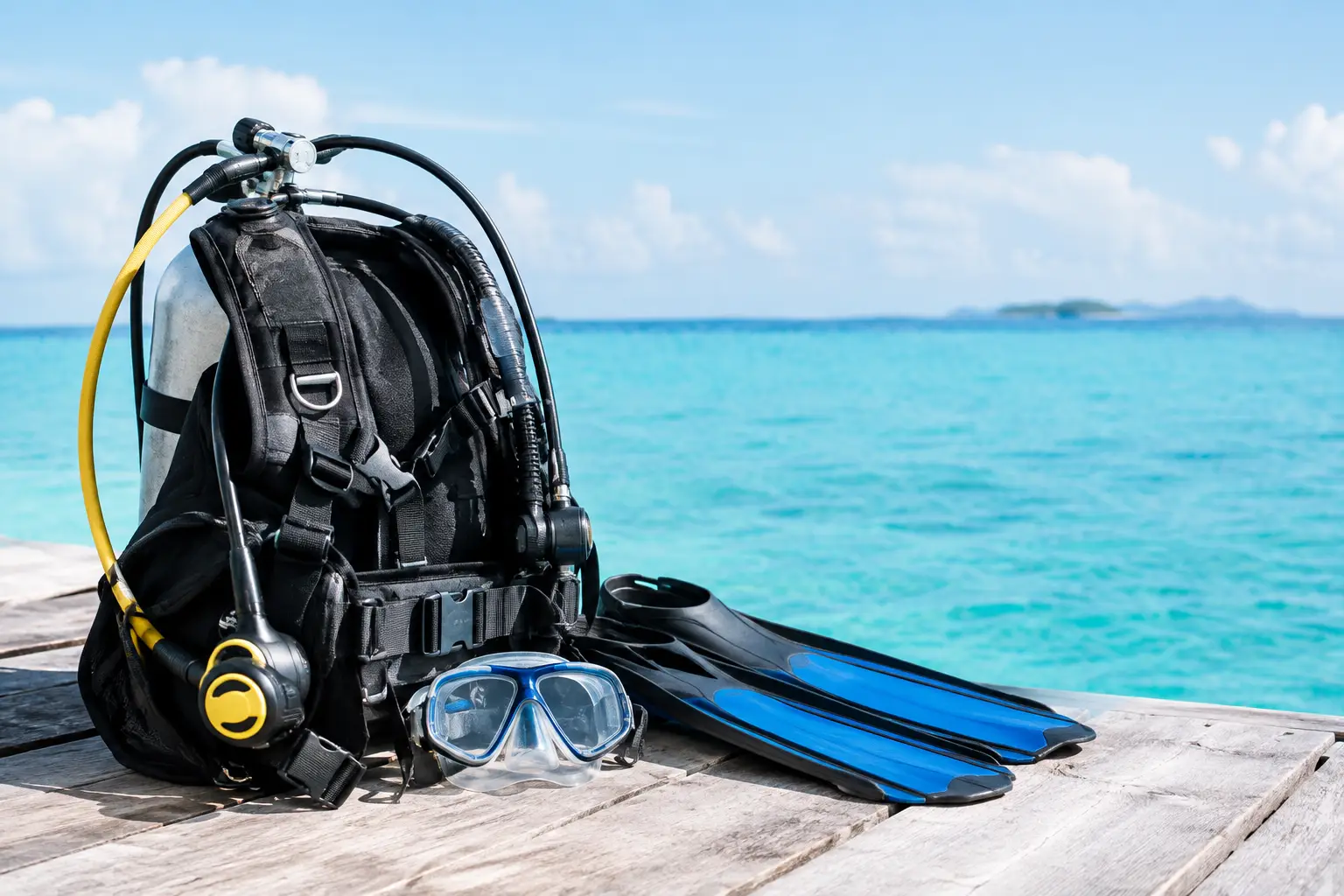
Equipment fit matters more than beginners often expect. A mask that seals well, fins that do not pinch, and a wetsuit appropriate for the water temperature help you focus on the reef instead of distractions. Mention any discomfort before getting in the water. A few minutes of adjustment on the boat can prevent frustration later.
How to prepare without overthinking it
You do not need to be an Olympic swimmer to try scuba diving, but you should be comfortable in the water and able to follow instructions. Eat a light meal, drink water, and avoid alcohol before the activity. A heavy meal can make boat travel uncomfortable, while dehydration can leave you tired more quickly in the sun.
Bring a swimsuit, towel, reef-safe sun protection for time above water, and a positive willingness to learn. Avoid flying after diving until the recommended surface interval has passed. Your dive team can tell you how to plan around your flight, especially if your last vacation day is your only available window.
If you have a medical condition, take prescription medication, are pregnant, or have had recent surgery, discuss it honestly before booking. Depending on the condition, you may need medical clearance. That is not a barrier designed to exclude you. It is part of making sure your first experience is a good one.
Let the reef set the pace
The Caribbean does not reward rushing. The best first dives happen when you stop trying to do everything perfectly and begin noticing what is around you: a school of blue tangs turning together, a trumpetfish hovering near coral, sunlight moving across white sand.
Your first descent may begin with a racing heart, but it can end with the quiet confidence of knowing you belong there. Choose calm conditions, trusted instruction, and a small group, then let the reef introduce itself one breath at a time.
Want to dive in the Dominican Republic?
Tell us your level, dates and what kind of experience you want. We will help you choose a dive, course or excursion.
Talk on WhatsApp