Is Cenote Diving in the Dominican Republic for You?
Cenote diving Dominican Republic offers clear freshwater caverns, but access, training, and conditions matter. Learn how to plan a safe, personal trip there.
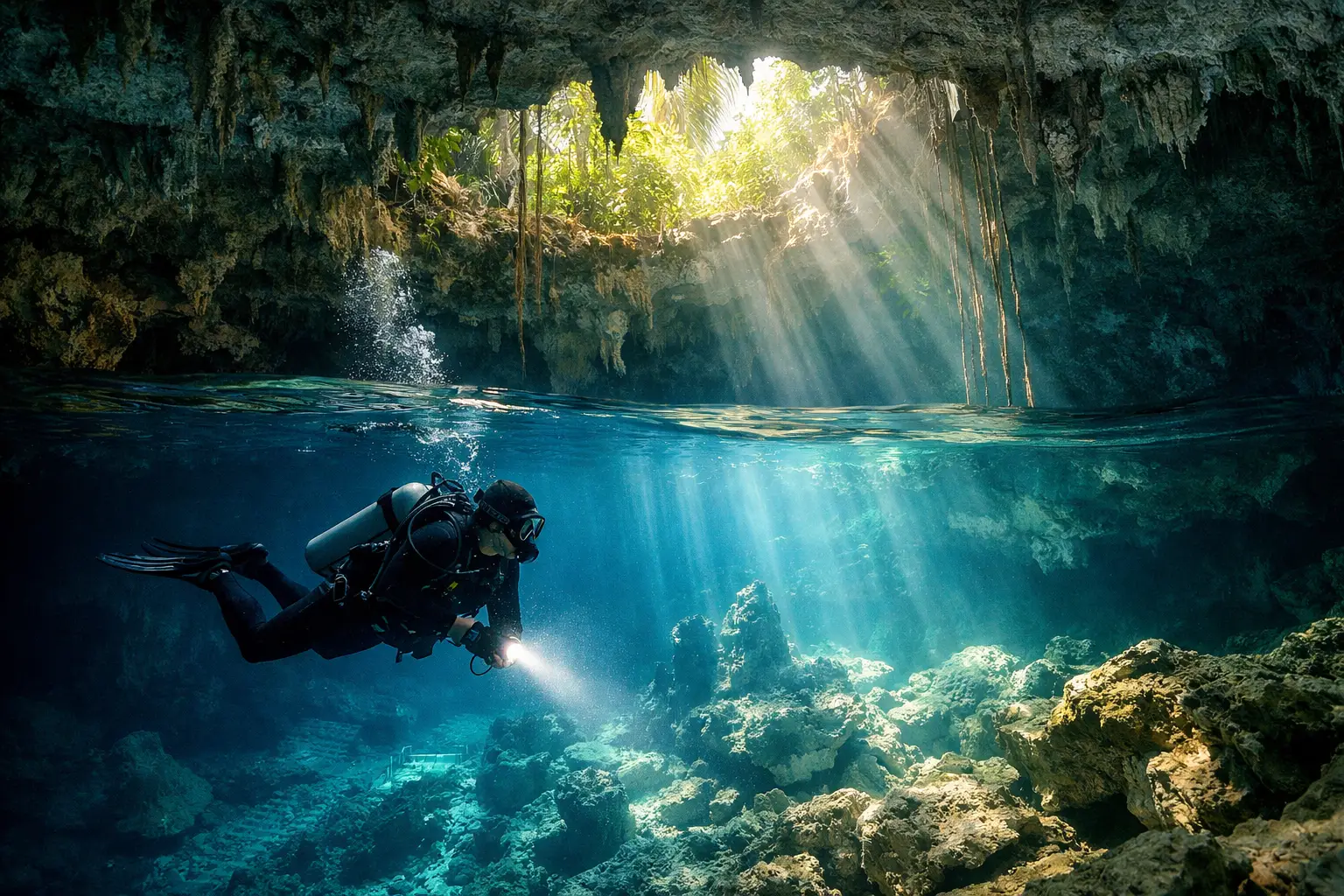
A few fin kicks can take you from the sunlit blue of the Caribbean into a quiet chamber where freshwater is so clear that rock formations seem to float. That contrast is the appeal of cenote diving Dominican Republic travelers come looking for: a more intimate side of the island, shaped by limestone, groundwater, and patient exploration rather than wide-open reef scenery.
But a Dominican cenote is not a copy of a Mexican cenote, and that difference matters. Access can be more limited, sites may operate under specific local rules, and some spaces that look inviting are suitable only for trained cave divers. The best experience starts with choosing the right type of underwater environment for your certification, comfort level, and sense of adventure.
What Cenote Diving in the Dominican Republic Is Really Like
The Dominican Republic sits on limestone geology with freshwater systems, sinkholes, caves, and submerged caverns. These landscapes can produce dramatic light, calm water, mineral-shaped walls, and a feeling of remoteness that is completely different from a reef drift dive off Punta Cana.
Still, the word “cenote” is used broadly. A site may be an open freshwater sinkhole, a cavern with a visible exit, or a true overhead cave system. Those are not interchangeable environments. An open cenote can be ideal for a relaxed swim or a carefully managed introductory experience, while a cavern requires disciplined buoyancy, precise navigation, and a guide who knows the site. A cave dive requires specialized training, redundant equipment, and formal cave-diving procedures.
For most vacationing certified divers, a guided cavern-style experience is the realistic goal when conditions and site access permit it. You may descend through a bright opening, follow a route where natural daylight remains visible, and observe the textures of limestone without committing to a technical cave penetration. It is atmospheric, beautiful, and demanding in a quieter way than a deep wall or wreck.
Cenotes, Caverns, and Caves: Know the Difference
The language can sound like a technical detail, but it directly affects your safety and enjoyment. Before booking, ask exactly what type of dive is planned.
An open-water cenote or sinkhole has direct access to the surface. It can offer exceptional visibility and calm freshwater, yet conditions still need to be assessed on the day. A cavern dive enters an overhead setting but stays within the daylight zone, with the exit visible throughout the planned route. This is not the same as swimming into a dark tunnel for a photo.
A cave dive goes beyond the daylight zone into a fully enclosed environment. Standard Open Water or Advanced Open Water certification does not qualify someone for cave diving. Even a confident diver with hundreds of ocean dives needs specific training because the procedures, equipment configuration, navigation methods, and emergency planning are different.
A professional operator will not blur these lines to make an excursion sound more dramatic. They will explain the route, the maximum depth, the expected visibility, the entry and exit plan, and the certification required. If the explanation is vague or the phrase “you’ll be fine” replaces a real briefing, it is reasonable to choose another plan.
Who Will Enjoy This Experience Most?
Cenote diving rewards divers who appreciate observation over speed. You are there for the details: a ray of light cutting through freshwater, small ripples in the stone, an air pocket high above, and the strange sensation of hovering in a natural room instead of swimming across a reef.
It can be especially memorable for certified divers who already enjoy good buoyancy control and want a change from coral gardens and boat dives. Couples and small private groups often love it because the pace is naturally personal. There is time to ask questions, settle your breathing, and take in the setting without another large group crowding the entry point.
It may not be the right choice for everyone. If your dream dive involves turtles grazing on coral, schools of fish moving through blue water, or a big deep-water descent, a reef, wreck, or wall dive may fit better. Cenotes generally deliver geology and stillness rather than abundant marine life. Freshwater also has a different visual character, and the water may feel cooler than the sea.
New divers should be honest about their comfort in confined-looking spaces. Feeling curious is great. Feeling pressured to enter an overhead environment is not. A thoughtful guide can recommend an open-water alternative or a gradual progression that keeps the adventure exciting without pushing past your limits.
The Skills That Make a Cenote Dive Better
You do not need to be an elite technical diver for every freshwater cavern experience, but you do need control. Good buoyancy is essential because a careless fin kick can stir up fine sediment and erase the visibility that makes these spaces so special. Slow, deliberate movement protects both the environment and the group behind you.
Trim matters too. Keeping your body horizontal helps you avoid brushing against walls or the bottom. Your guide may ask you to use gentle frog kicks rather than wide flutter kicks, maintain close awareness of your tank and fins, and stay in a specific position on the route.
Air awareness becomes more intentional in enclosed-feeling spaces. The guide should set conservative turn points and keep the group together. You should be comfortable signaling, checking your pressure regularly, and following the plan even when the view makes you want to stay another five minutes.
If these skills feel rusty, do not treat that as a reason to skip the experience. Treat it as a reason to refresh them first. A calm check dive, a buoyancy-focused session, or a private guide can make a significant difference. At Scuba & Chill, small groups of no more than four divers create the kind of individual attention that helps divers settle in, ask questions, and move at a responsible pace.
How to Plan Cenote Diving Dominican Republic Safely
Start planning with flexibility. Freshwater sites can be affected by rainfall, water levels, seasonal conditions, conservation restrictions, and local access rules. A responsible operator may adjust the plan or recommend another exceptional dive if a cenote is not suitable that day. That is not a compromise in safety. It is good decision-making.
Before confirming your excursion, share your certification level, number of logged dives, date of your last dive, and any concerns about overhead environments. Be equally clear if you are prone to anxiety in tight spaces, have trouble equalizing, or have not used a particular equipment setup before. The right guide wants that information early, not once you are standing at the water’s edge.
Ask whether the route remains in the daylight zone, whether all equipment is included, how transfers are handled, and how much time is planned for the briefing. You should also ask what happens if conditions change. Clear answers are a sign that the operation has a real plan rather than a fixed sales script.
For a more comfortable day, bring a dry change of clothes, reef-safe personal care items, a towel, and water. Avoid touching rock formations or using them to stabilize yourself. Limestone features can take centuries to form, and even a small amount of contact can damage fragile surfaces or cloud the water for other divers.
Why Small Groups Matter Underground
A small group is not simply a premium detail. In a cavern or cenote setting, it changes the quality of the dive. The guide can monitor each diver’s buoyancy, communicate clearly, and manage the pace without rushing anyone. There is less sediment disturbance, more room to move thoughtfully, and a better chance to experience the natural silence that brought you there.
It also gives you space for a proper briefing. You should understand the hand signals, order of travel, turnaround rules, lighting expectations, and what to do if you lose sight of the guide. The goal is not to make the dive feel intimidating. It is to remove uncertainty so you can be present for it.
The Caribbean has plenty of spectacular underwater choices: reef color, historic wrecks, deep walls, and encounters with larger marine life. A cenote or cavern day belongs in the itinerary when you want a different rhythm. It is an adventure built on patience, respect, and the pleasure of seeing a familiar island from below its surface.
Choose the experience that matches your training, listen closely to the briefing, and let the route unfold slowly. The most memorable moments in the Caribbean Deep are often the quiet ones.
Want to dive in the Dominican Republic?
Tell us your level, dates and what kind of experience you want. We will help you choose a dive, course or excursion.
Talk on WhatsApp