How to try scuba diving in Punta Cana
Learn how to try scuba diving in Punta Cana, from safety checks and breathing practice to choosing a small group and enjoying your first reef.
The first breath underwater is usually the moment that changes everything. If you are searching how to try scuba diving, you do not need previous diving experience, athletic credentials, or the confidence of someone who has spent years in the ocean. You need a calm introduction, a qualified instructor, well-maintained equipment, and enough personal attention to move at your own pace.
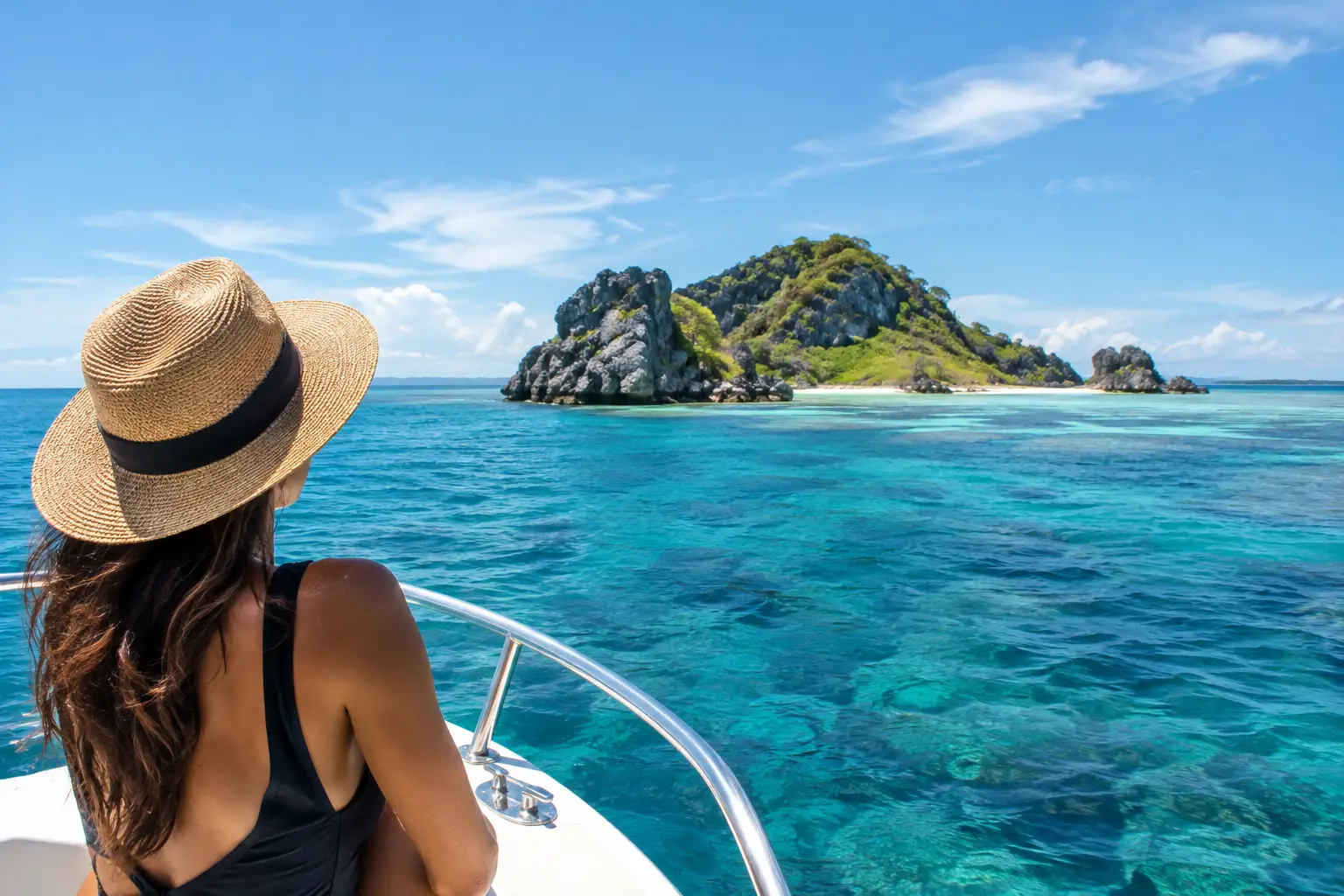
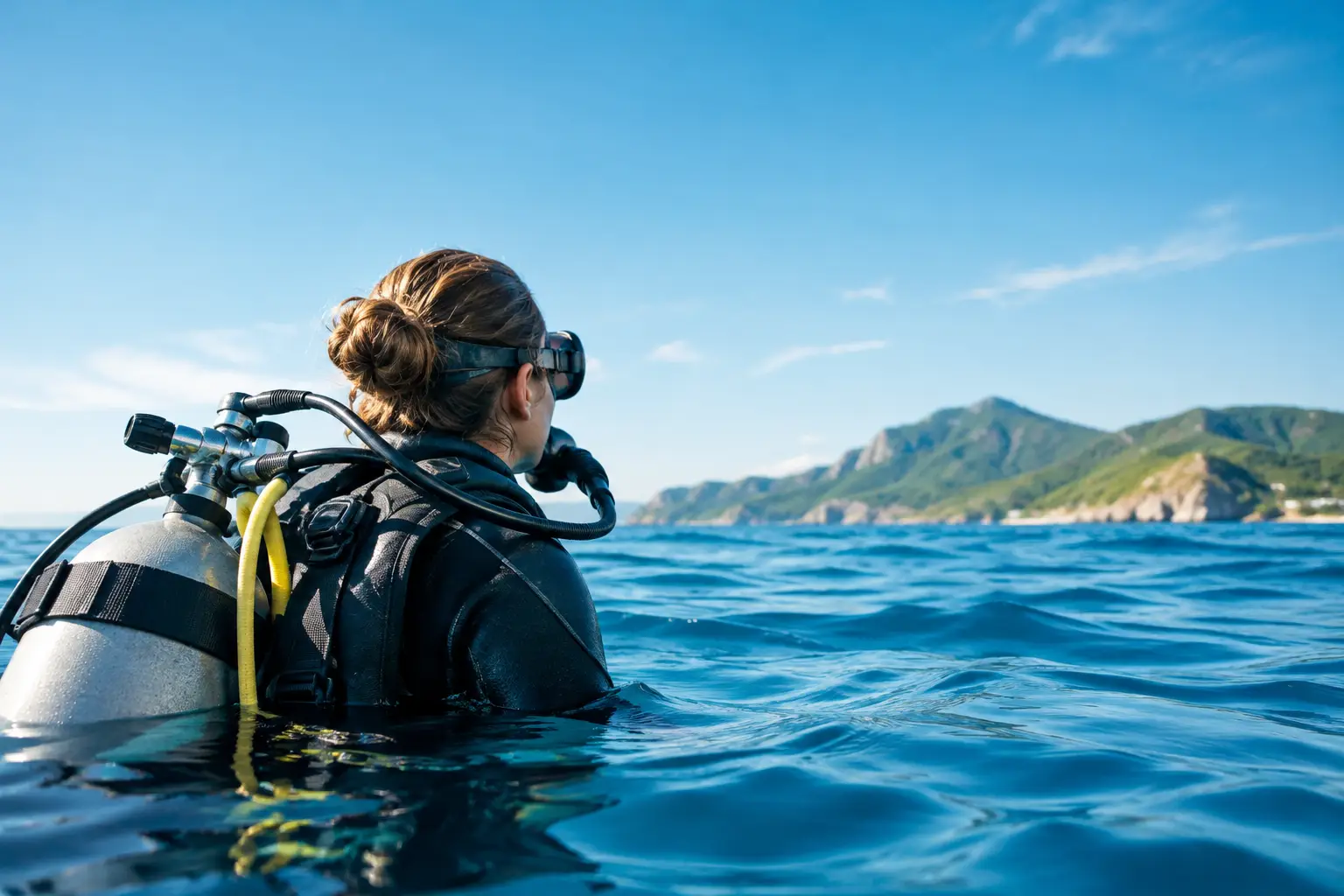
A discovery dive, often called a scuba baptism or Discover Scuba Diving experience, lets you explore the Caribbean underwater world under direct professional supervision. In Punta Cana, that can mean floating over coral gardens, watching schools of tropical fish move through clear blue water, and discovering that the sea is far quieter and more welcoming than you imagined.
What a scuba baptism really is
A scuba baptism is an introductory experience, not a certification course. You learn the essential skills needed for one supervised dive, then enter the water with a certified instructor. You will not leave with a scuba license, but you will know whether diving is something you want to continue through a PADI course.
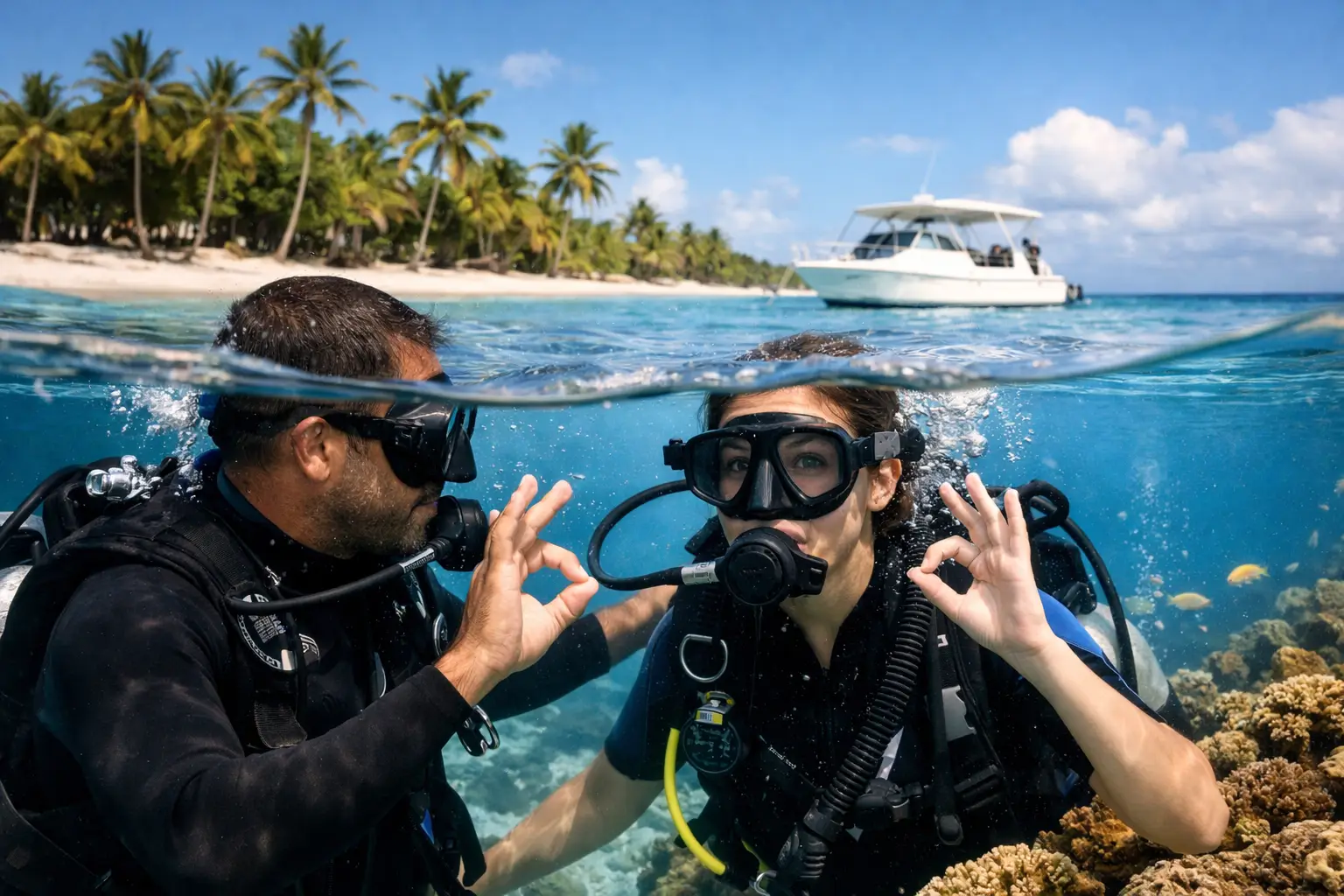
The goal is not to push depth, speed, or adrenaline. It is to help you feel comfortable breathing from a regulator, moving with fins, and communicating underwater. A good experience feels personal: the instructor watches your pace, checks your comfort repeatedly, and stays close enough for immediate support.
For first-timers, shallow reef sites are often a better choice than dramatic walls or shipwrecks. The trade-off is simple. A famous deep site may sound exciting, but a protected reef with gentle conditions gives you more time to relax, notice marine life, and enjoy the experience instead of managing nerves.
Before your first dive: what you need to know
You should be able to swim comfortably and be in reasonable general health. You do not need to be an expert swimmer, but you should be comfortable in the water and able to follow instructions. Before diving, you will complete a medical questionnaire. Certain conditions, medications, recent surgeries, pregnancy, or respiratory and heart concerns may require medical approval before entering the water.
Be honest on this form. It is not paperwork to get through quickly. It helps the dive team make decisions that protect you and everyone in the group.
You should also avoid flying after scuba diving. The exact waiting time depends on the number and profile of dives, so plan your discovery experience before your final travel day whenever possible. Do not arrive dehydrated, hungover, exhausted, or after a heavy meal. A light breakfast, water, sunscreen applied well before departure, and a relaxed schedule are a much better start.
What to bring and what is usually provided
Bring a swimsuit, towel, reusable water bottle, dry clothes, and reef-safe sun protection. If you wear contact lenses, tell your instructor. Many divers use them without issue, but it is useful information during the briefing.
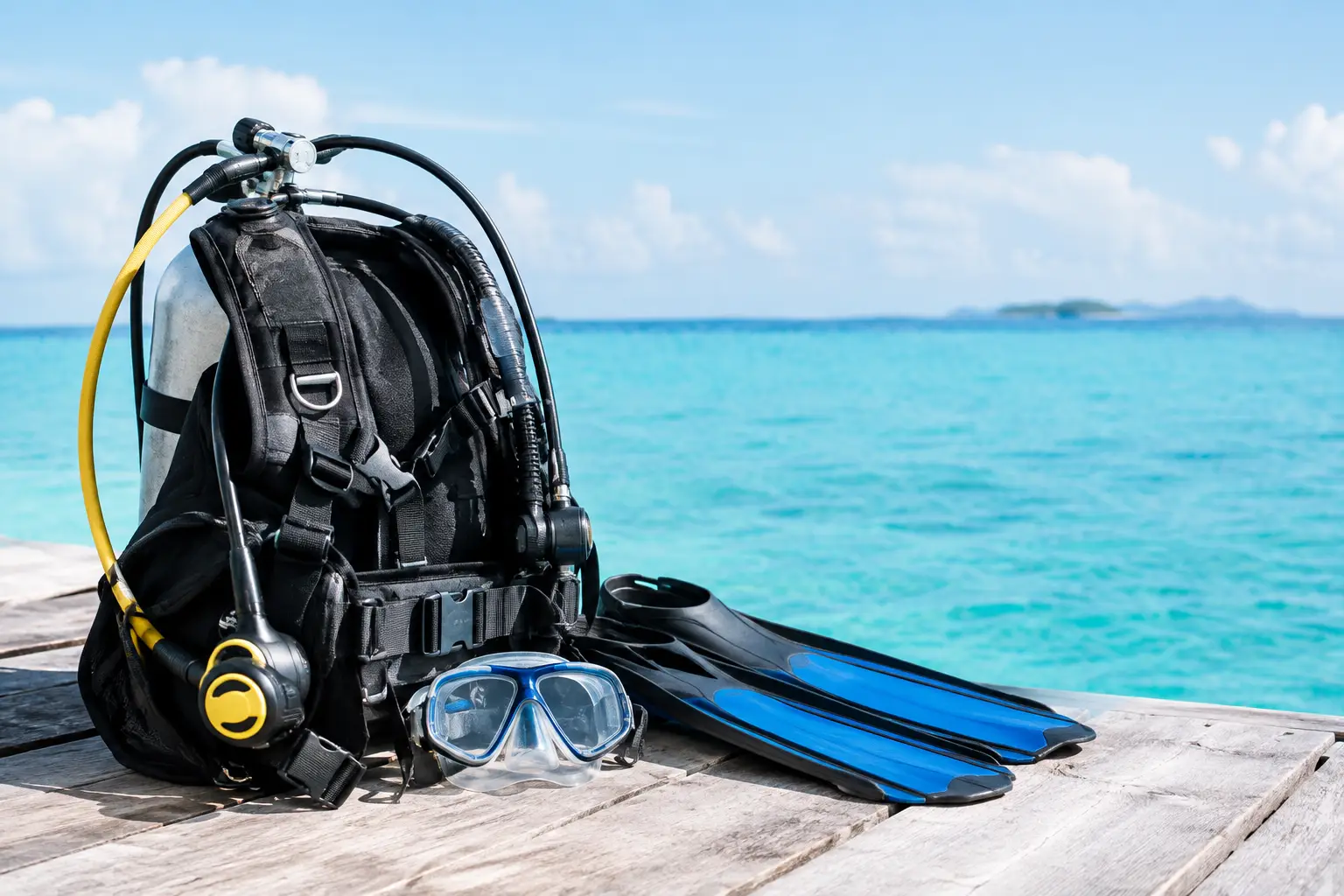
A professional center should provide the technical gear: mask, fins, wetsuit or rash guard as conditions require, buoyancy control device, regulator, tank, weights, and safety equipment. You do not need to buy your own equipment for a first dive. In fact, having an instructor fit and explain every item is part of the experience.
How to do a scuba baptism step by step
1. Begin with a clear, unhurried briefing
Before the boat leaves or you enter the water, your instructor explains what will happen, how the equipment works, and which hand signals you will use. You will learn how to clear water from your mask, recover your regulator if it leaves your mouth, equalize pressure in your ears, and signal that you are okay or need help.
This briefing should feel approachable, not rushed or overly technical. Ask every question you have, including the one that may feel obvious. Are you worried about breathing? Say it. Concerned about ear pressure? Mention it. Nervous about fish, waves, or being unable to touch the bottom? Your instructor needs to know so they can guide you properly.
2. Practice in shallow water first
The first skills happen where you can stand or kneel comfortably. You will put your face in the water and breathe slowly through the regulator. This can feel unusual for a few seconds because your brain expects air to come through your nose. Give yourself time.
The best approach is simple: inhale slowly, exhale fully, and look around. Do not hold your breath. Scuba equipment is designed to deliver air as you breathe, and a calm rhythm makes the entire experience easier.
You may practice clearing your mask and regulator more than once. That is completely normal. There is no prize for doing it fast. Confidence is built through repetition, especially during a first underwater experience.
3. Descend slowly and equalize early
When it is time to go down, the instructor will guide you gradually. You may feel pressure in your ears, similar to what happens on an airplane. Equalize early and often by using the method your instructor demonstrated, usually gently pinching your nose and blowing softly or swallowing.
Never force it. If your ears do not clear, signal the instructor and ascend slightly before trying again. Most ear discomfort is solved by slowing down. This is one reason small groups matter: your dive should not be dictated by the fastest person in the water.
4. Find neutral buoyancy and enjoy the reef
Once you are comfortable at depth, your instructor adjusts your buoyancy so you can float without kicking constantly or touching the reef. This is where the adventure begins to feel effortless. You may see parrotfish grazing on coral, blue tangs passing in bright flashes, trumpetfish hovering vertically, or a curious turtle gliding beyond the reef.
Keep your hands close, move slowly, and never touch coral, marine animals, or the seafloor. Coral is alive and fragile. Good diving is not about getting closer at any cost; it is about observing without leaving a trace.
Choosing the right first-dive operator in Punta Cana
The quality of your first dive depends less on the number of boats an operator has and more on the attention you receive in the water. Ask whether the instructor is PADI certified, how many people are in each group, whether equipment is included and maintained, and whether transportation from Bávaro is available.
A maximum of four divers per guide is a meaningful advantage for beginners. It gives the instructor time to check your fit, observe your breathing, help with ear equalization, and adapt the route to the group. Larger groups can be fine for experienced divers, but a first descent deserves a more personal format.
It is also worth asking where the baptism takes place. A calm reef near Punta Cana may be ideal for someone who wants an easy introduction. If conditions are not favorable, a responsible operator will change the plan, delay the dive, or recommend another day. Safety decisions should never feel like a disappointment. They are a sign that the team is putting your experience ahead of a schedule.
Scuba & Chill approaches first dives as a guided entry into the Caribbean Deep, with certified instructors, full equipment, complimentary Bávaro transportation, and groups limited to four guests. That small-group approach makes room for the questions, pauses, and reassurance that turn a nervous first breath into genuine excitement.
Common first-dive worries, answered honestly
“What if I panic?” You do not have to continue. You can stop in shallow water, take a break, or decide not to dive. A professional instructor will never pressure you. Most anxiety fades once you realize you can breathe normally and communicate at any moment.
“What if I cannot equalize my ears?” This happens to many people, especially with congestion or a rushed descent. Do not dive with a cold or blocked sinuses, and do not force your ears. Slow down and let the instructor help. Sometimes the best decision is to try on another day.
“Will I see sharks?” Most introductory reef dives focus on colorful fish, coral formations, and relaxed exploration. Sharks are not a standard promise on a baptism dive, and that is appropriate. Marine encounters are never guaranteed, but the Caribbean has plenty to reveal without chasing a checklist.
“Can my partner dive if I am unsure?” Often, yes, depending on the program and conditions. But do not commit yourself just because someone else is ready. Your first dive should happen because you feel curious and supported, not because you feel obliged.
Turn curiosity into a skill
A scuba baptism is a beautiful beginning, but it is only the first page. If you leave the water wanting more control, more time underwater, and access to deeper reefs, wrecks, and new destinations, a PADI Open Water course is the natural next step.
For now, focus on the small moment ahead: your first calm exhale beneath the surface, the sound of bubbles rising, and a reef opening in front of you. The Caribbean does not ask you to be fearless. It simply asks you to take that first breath slowly.
Want to dive in the Dominican Republic?
Tell us your level, dates and what kind of experience you want. We will help you choose a dive, course or excursion.
Talk on WhatsApp