Coral Restoration: What Every Diver Can Do
Coral restoration helps Caribbean reefs recover, but healthy diving habits matter too. See how Punta Cana divers can support reefs with care every day.
A coral reef can look eternal from the surface: clear blue water, a bright reef line, boats passing over it on the way to Isla Catalina or Saona. Below the surface, it is anything but static. Coral is alive, sensitive, and constantly responding to heat, storms, disease, sediment, and the way people move through its habitat. Coral restoration gives damaged reefs a chance to recover, but its real value becomes clearer when divers understand what they are helping protect.
For visitors to Punta Cana and Bávaro, this is not an abstract environmental issue. The reefs are where parrotfish graze, juvenile fish shelter, sea fans sway in the current, and every guided dive becomes a memory worth carrying home. Protecting them starts with curiosity, continues with good habits underwater, and sometimes includes supporting carefully designed restoration work.
What coral restoration actually means
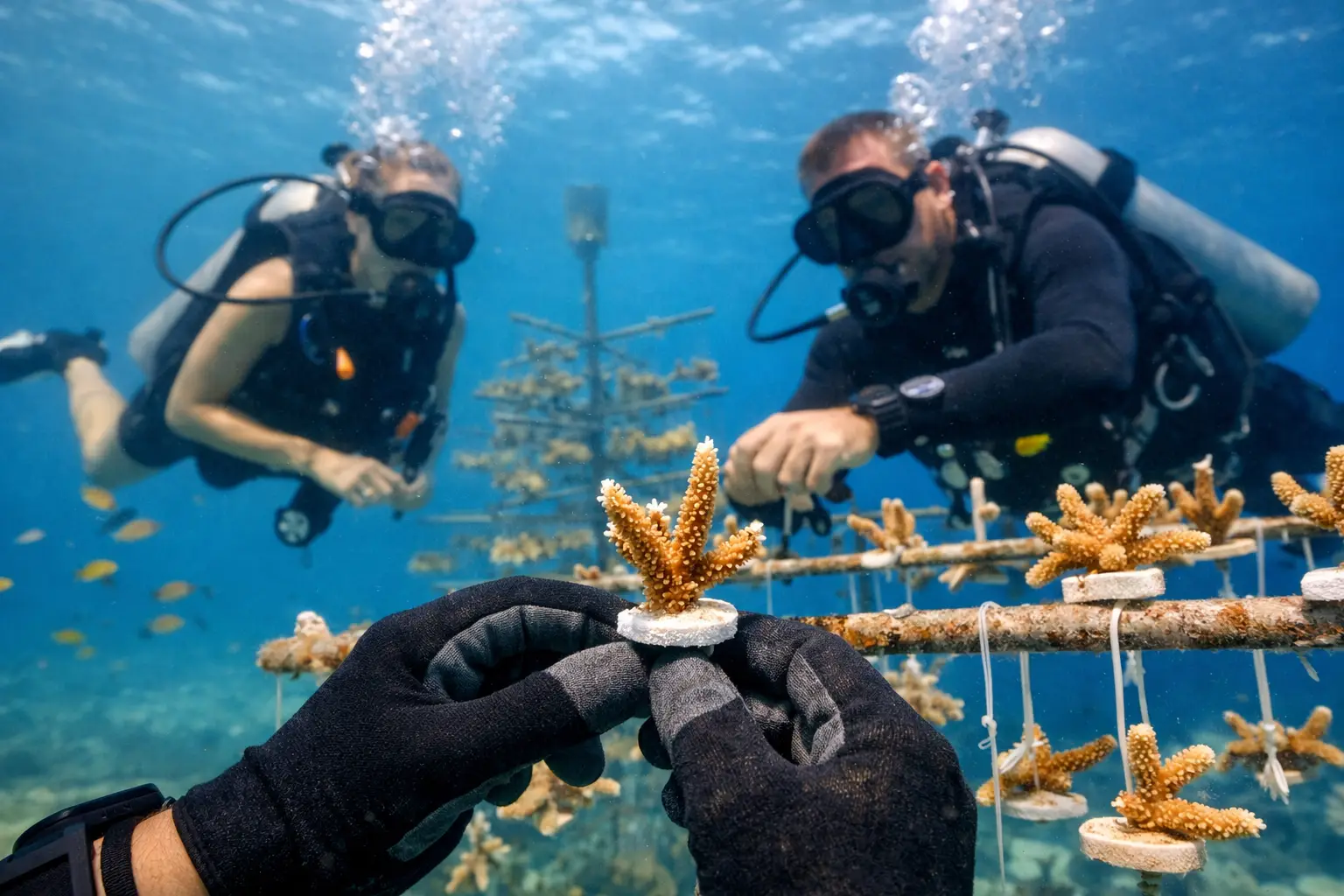
Coral restoration is the hands-on process of helping coral populations recover in places where reefs have been damaged or weakened. It can involve growing coral fragments in underwater nurseries, attaching healthy young corals to suitable reef areas, monitoring survival, and protecting the conditions those corals need to grow.
Corals are animals, not plants or rocks. Many reef-building species live alongside microscopic algae that provide much of their energy through sunlight. When water becomes too warm, polluted, or stressed, this relationship can break down. The coral may bleach, turning pale or white, and if stress lasts too long, it can die.
Restoration teams often work with naturally broken fragments or fragments collected under permitted scientific protocols. In a nursery, these small pieces are secured to structures such as trees, ropes, or frames where they can grow with good water flow and limited competition. Once they reach an appropriate size, trained teams outplant them onto the reef.
It is skilled, patient work. A newly planted coral is not a finished reef. It needs time, stable conditions, and ongoing monitoring before it can contribute meaningfully to habitat complexity and reproduction.
Restoration is not a shortcut
Planting coral can be powerful, especially after storms, vessel damage, disease outbreaks, or local habitat loss. But it cannot solve every pressure facing a reef. If sewage, coastal construction runoff, overfishing, repeated anchor damage, or extreme marine heat continue, newly planted corals face the same risks as the reef around them.
That is why the strongest projects combine restoration with reef protection. They may include mooring buoys that reduce anchor damage, fish habitat protection, water-quality efforts, disease monitoring, and education for residents and visitors. In other words, coral planting matters most when the reef has a realistic chance to thrive afterward.
Why healthy reefs matter in the Caribbean
A reef is not simply a beautiful backdrop for a dive. It is a living neighborhood that supports a huge range of marine life. Branching corals can provide refuge for young fish. Boulder corals create shelter and feeding areas. Healthy reef structure supports the food web that makes Caribbean diving feel alive.
Reefs also help soften wave energy along coastlines. This natural barrier can reduce erosion and protect beaches and coastal communities during rough weather. For destinations built around clear water, beaches, snorkeling, diving, and fishing, reef health has ecological and economic consequences.
There is also a personal reason to care. The difference between a reef with active fish life, varied coral shapes, and clean water and a reef covered in algae or broken rubble is immediately visible underwater. Divers are among the few visitors who can witness these changes closely. That perspective comes with an opportunity to act thoughtfully.
How divers can support coral restoration
You do not need to be a marine biologist to make a meaningful difference. The most useful actions often happen during ordinary dives, before entering the water and after returning to shore.
First, choose operators that treat the reef as part of the experience, not as scenery to rush through. Small groups allow guides to manage buoyancy, point out marine life without crowding it, and help newer divers feel comfortable before they approach a reef. At Scuba & Chill, groups are limited to four divers, creating the space for a more personal and reef-aware adventure.
Second, make buoyancy control your priority. A fin tip, dangling gauge, or knee touching coral can cause damage that takes years to repair. Before drifting close for a photo, pause a few feet away and confirm that you are neutral and stable. If conditions are challenging, enjoy the wider view rather than forcing a close approach.
Third, keep your hands to yourself. Coral tissue can be damaged by contact, and even apparently solid reef surfaces may contain fragile living organisms. Avoid holding the reef against a current, moving marine life for a picture, or collecting shells and coral fragments as souvenirs.
Finally, use reef-safe choices as part of a broader approach, not as a magic label. Sun protection matters, but the biggest practical steps remain reducing direct contact, keeping trash out of the ocean, respecting marine-life rules, and supporting businesses that follow responsible mooring and diving practices.
The best underwater habits are simple
Good reef etiquette becomes second nature quickly. Enter and exit carefully, especially in shallow areas where waves can push fins toward coral. Secure alternate air sources, cameras, hoses, and accessories so they do not drag. Follow your guide's route instead of cutting across sensitive sections of reef.
Photography deserves special attention. A great image should never require touching the bottom, blocking an animal's path, or chasing a fish into a coral head. The most memorable underwater photos usually come from patience: settle your breathing, wait for the right moment, and let the reef continue behaving naturally.
For new divers, this is one reason training matters. A confined-water session and attentive instructor build the control that makes open-water diving safer for both people and reefs. For certified divers, a refresher before a vacation dive can be a smart choice if it has been a while since the last descent.
What to ask before joining a restoration activity
Some travelers want to get closer to conservation work, and that interest is valuable. Before choosing a coral nursery visit or restoration activity, ask who manages the program, whether it has local permits and scientific oversight, and how survival is monitored after outplanting.
A responsible program should be able to explain what coral species it works with, why a site was selected, and what threats the project is addressing. Be cautious of experiences that present coral planting as a quick souvenir activity with no context. Conservation is more meaningful when participants understand that success is measured over months and years, not only by a photo taken on one afternoon.
You can also ask how the activity avoids disrupting the nursery itself. Coral nurseries are working spaces, not touch tanks. The best visit is one where participants observe carefully, learn from trained staff, and leave the site undisturbed.
A reef-friendly dive begins before the boat leaves
The choices made on land affect the ocean as well. Refill a reusable water bottle instead of bringing single-use plastic whenever possible. Keep packaging and cigarette waste secured, particularly on windy docks and boats. Never pour chemicals, oils, or leftover products near storm drains or the shoreline.
When booking a dive, remember that conditions matter. Strong currents, surge, poor visibility, or a crowded site can make maintaining distance from coral harder, particularly for less experienced divers. There is no shame in selecting a calmer site or postponing a dive. The best Caribbean adventure is one that matches your comfort level and protects the place you came to see.
This is also where private or small-group diving has a practical advantage. A guide can adjust the pace, give buoyancy reminders, and choose a route suited to the group rather than moving dozens of people through the same narrow reef corridor.
Coral restoration is a long-term relationship
The hopeful part of restoration is real. Corals can grow, damaged sites can regain structure, and communities can build stronger protection around the reefs they depend on. Yet optimism works best when it is honest. Some coral species grow faster than others. Some sites recover more easily than others. A heat-stressed season can change the outlook quickly.
That uncertainty is not a reason to disengage. It is a reason to value every responsible choice. When divers move with control, respect wildlife, select thoughtful operators, and share what they learn, they help make reef protection part of Caribbean travel rather than an afterthought.
The next time you descend over a reef in Punta Cana, take a moment before looking for the biggest fish or the perfect photo. Notice the small coral colonies, the cleaner fish at work, the juvenile life tucked into the structure. The Caribbean Deep is not only a place to explore. It is a living place to leave better than you found it.
Want to dive in the Dominican Republic?
Tell us your level, dates and what kind of experience you want. We will help you choose a dive, course or excursion.
Talk on WhatsApp