St. George wreck guide for Punta Cana
Use this St. George wreck guide to plan a safe Punta Cana wreck dive, with depth, conditions, marine life, skills, and practical expectations ahead.
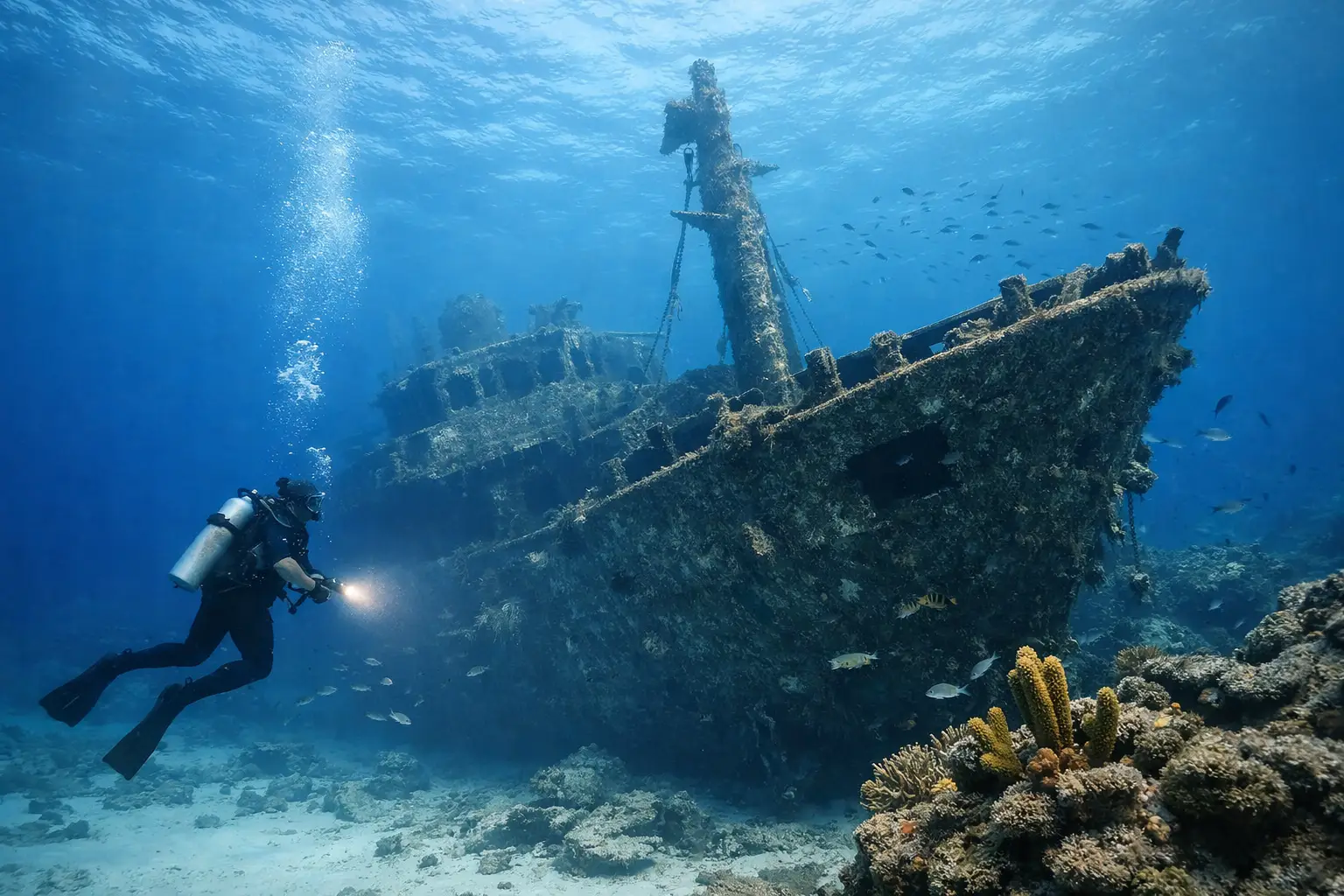
If you came looking for a St. George wreck guide, start with this: the St. George is not a casual sightseeing stop. It is one of the Caribbean’s most memorable wreck dives because it combines the scale of a real cargo ship with blue-water depth, changing light, and the feeling that the ocean has slowly made the vessel its own.
For certified divers visiting Punta Cana and Bávaro, this is a chance to move beyond shallow reef scenery and enter the Caribbean Deep with purpose. The experience can be exhilarating, but it rewards good buoyancy, calm awareness, and a dive plan that respects depth from the first descent to the final safety stop.
Why the St. George wreck feels different
The St. George was intentionally sunk to create an artificial reef, and today its long steel structure supports a busy marine community. As you approach it through the blue, the first impression is its size. The wreck does not appear all at once. Its lines emerge gradually: deck sections, railings, openings, cargo areas, and surfaces softened by coral growth and sponges.
This is the appeal of wreck diving at its best. You are not only looking at a ship. You are watching how the sea transforms a human-made structure into habitat. Schools of fish use the wreck as shelter, while larger visitors often patrol the outer edges where open water meets steel.
Conditions and visibility shape every dive. On a clear day, you may see large portions of the vessel from a distance, making its profile especially dramatic. When the water is more blue and atmospheric, the wreck becomes a series of scenes revealed as you move along it. Neither version is less rewarding, but each calls for attention to your guide, depth, and position.
St. George wreck depth and certification
The St. George is generally considered an advanced wreck dive. Much of the site sits at recreational deep-diving depths, commonly around 100 to 140 feet depending on the part of the wreck being explored, the conditions, and the route chosen by your guide.
That depth changes the nature of the dive. Air consumption can be faster, no-decompression time is shorter, colors fade quickly, and small buoyancy mistakes have greater consequences. An Advanced Open Water certification, Deep Diver training, or proven experience at similar depths is strongly recommended. Some operators may set specific certification and recent-dive requirements, so it is wise to confirm your eligibility before committing to the trip.
A responsible guide will plan the profile around the group’s actual experience, not just the highest certification card in the group. That may mean spending more time on the upper sections of the wreck, keeping the route simple, or choosing a different site when conditions do not support a comfortable deep dive. The best wreck dive is not the deepest one. It is the one you can enjoy while staying in control.
Is the St. George suitable for newly certified divers?
Usually, this is not the ideal first ocean dive after certification. A diver who has recently completed Open Water training may benefit more from building comfort on shallower reefs before visiting the St. George. Good buoyancy, awareness of your computer, equalization skills, and a relaxed response to open-water descents all matter here.
That does not mean newer divers are excluded from exploring the region. Punta Cana and the Dominican Republic offer reef dives, easier wreck options, and progressive training opportunities that can prepare you for a site like this. Treating the St. George as a goal rather than a box to check often makes the eventual experience far more enjoyable.
What you may see on the wreck
The St. George is known for the contrast between industrial structure and tropical life. Look closely at the metalwork and you may find colorful encrusting life, small reef fish moving through protected spaces, and delicate growth in areas where the current is gentler. In the surrounding blue, the scale shifts: larger schools, barracuda, jacks, and other pelagic visitors may pass beyond the rails.
Marine life is never guaranteed, and that uncertainty is part of the honest appeal. A wreck is not an aquarium. Water movement, season, visibility, boat traffic, and the time of day can influence what you encounter. Your guide should never promise a specific animal, but a well-paced dive lets you appreciate both the headline moments and the small details that many divers rush past.
Bring a camera only if it will not distract from your diving. Wide-angle images can capture the ship’s form and a buddy in the frame, but deep wreck photography demands solid buoyancy and awareness. If you are still working on those skills, leave the camera behind and let the first visit be fully visual.
A St. George wreck guide for safer planning
Preparation begins before you board the boat. Check when you last dove, whether your certification matches the planned depth, and whether you are comfortable descending in blue water. If you have not been underwater recently, a refresher or an easier first dive can make a meaningful difference.
Listen carefully to the briefing. On the St. George, details such as the descent method, maximum depth, turn pressure, route, current expectations, and ascent procedure are not formalities. They are the framework that gives you room to relax once you reach the wreck. Confirm the hand signals and the plan if you become separated from the group.
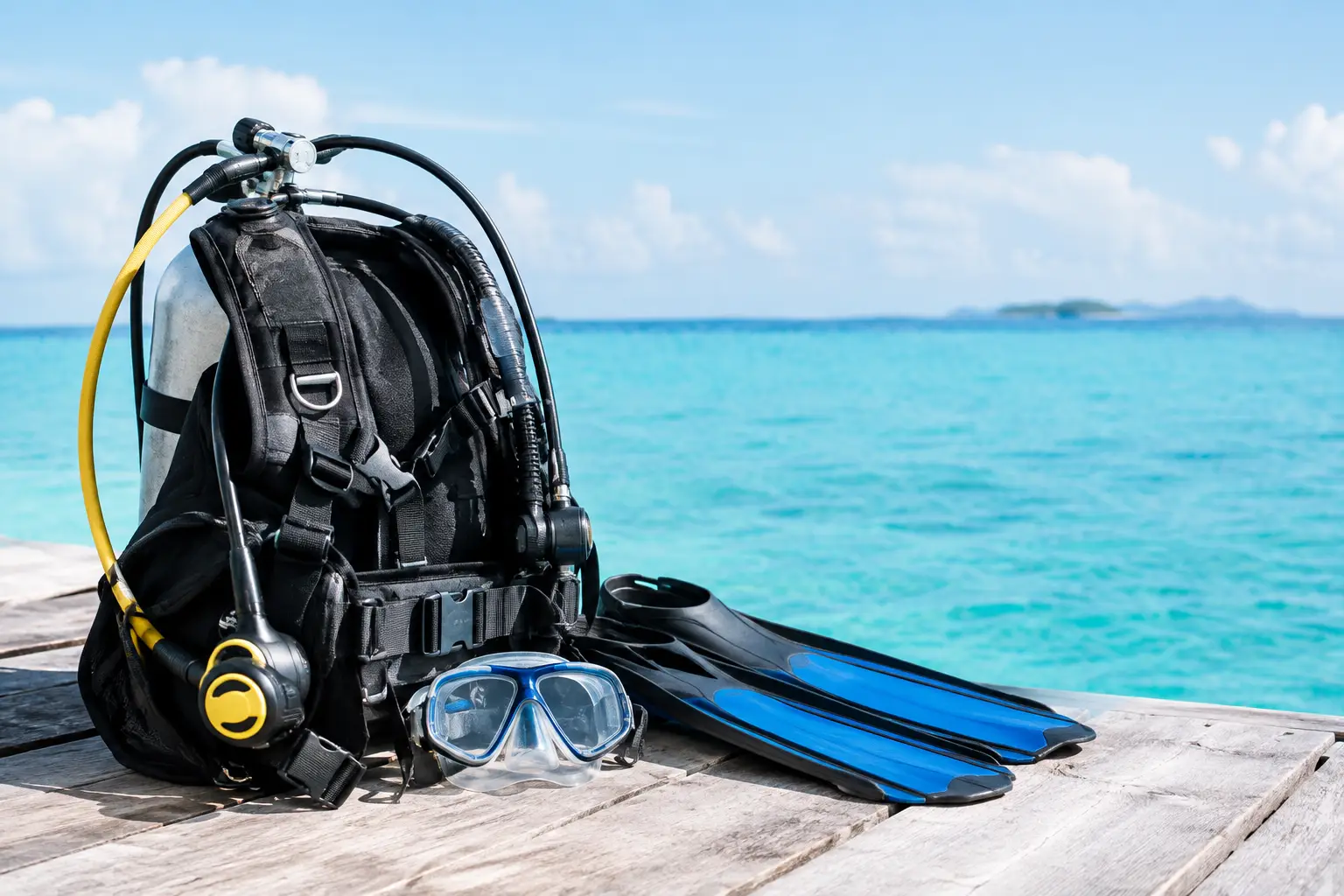
Use equipment you know well. A properly weighted setup, reliable computer, comfortable mask, and functioning alternate air source are more valuable than extra accessories. Many divers also prefer a surface marker buoy for deep or open-water sites, depending on local procedures. Your operator should inspect and configure rental equipment with you, rather than handing it over in a rush.
At Scuba & Chill, small groups of up to four divers allow the guide to tailor the pace, monitor comfort, and keep the experience personal. That approach matters on a wreck site, where a group that moves too quickly or spreads out too far can lose the calm that makes a deep dive enjoyable.
Penetration is not the default
Seeing openings in a wreck can create a strong temptation to look inside. Unless you have proper wreck-penetration training, specialized equipment, and a clearly planned overhead-environment dive, stay outside. Even apparently open spaces can contain sharp edges, unstable material, silt, entanglement hazards, or restricted exits.
External exploration is not a lesser version of wreck diving. The exterior of the St. George offers plenty to see: the profile of the ship, its decks and superstructure, marine life along the rails, and the blue water beyond the hull. Staying within your training protects both you and the site.
How to get the most from the experience
Do not race from bow to stern trying to see every detail. A good St. George dive has a rhythm: settle after the descent, orient yourself, take in the scale, follow the planned route, and leave enough mental space to watch the water around you. Some of the finest moments happen when you pause near the wreck and look outward instead of downward.
Manage your air conservatively and communicate early. If you are colder than expected, working hard against current, or using air faster than normal, tell your buddy or guide before it becomes a problem. Turning the dive early is good judgment, not a missed opportunity.
Afterward, give the surface interval the respect it deserves. Hydrate, avoid alcohol before and immediately after diving, and follow conservative guidance for flying. Deep dives deserve an unhurried schedule, especially during a vacation when it is easy to pack every hour with activity.
The St. George is worth choosing when you want more than a pretty reef and have the skills to meet it well. Arrive prepared, follow the plan, and let the wreck reveal itself at the pace of the Caribbean. That is where the real adventure begins.
Want to dive in the Dominican Republic?
Tell us your level, dates and what kind of experience you want. We will help you choose a dive, course or excursion.
Talk on WhatsApp