How to Equalize Scuba Ears Without Forcing It
Learn how to equalize scuba ears safely with simple techniques, timing tips, and guidance for when to pause a descent during your Punta Cana dive trip.
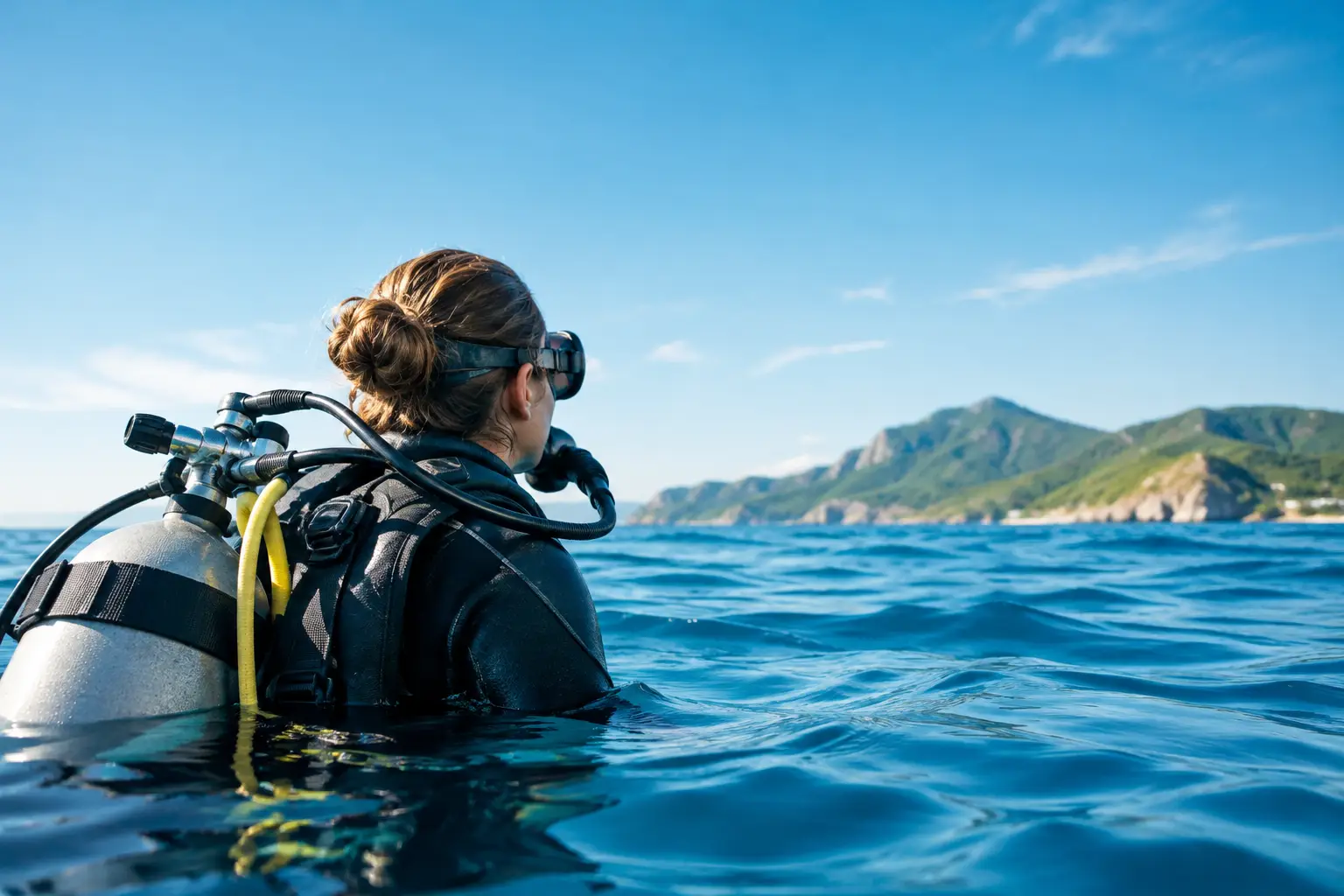
The first few feet of a descent can decide how the rest of your dive feels. If pressure builds behind your eardrums, the reef, wreck, or wall below is suddenly the last thing on your mind. Knowing how to equalize scuba ears calmly and early helps you stay comfortable, protect your ears, and enjoy the Caribbean Deep at your own pace.
Ear equalization is not a test of toughness. It is a small skill that improves with timing, relaxation, and personal attention - exactly the kind of detail that matters when you are breathing underwater.
Why your ears feel pressure underwater
As you descend, the water pressure around you rises quickly. Your outer ear is exposed to that pressure, while the air space in your middle ear needs to be replenished through the Eustachian tubes, the small passages connecting your ears to the back of your throat. Equalizing adds air to that space so the pressure on both sides of the eardrum stays balanced.
This is why discomfort often appears surprisingly close to the surface. The pressure change is greatest in the first 10 to 15 feet, so waiting until you feel real pain makes equalization harder. A gentle pop, click, or feeling of release is usually a sign that it worked. Sharp pain, however, is your signal to stop.
How to equalize scuba ears on descent
Start before you need to. Many divers gently equalize at the surface, then repeat every few feet as they begin descending. Think of it as a rhythm: equalize, descend a little, equalize again. Do not wait for your ears to feel blocked.
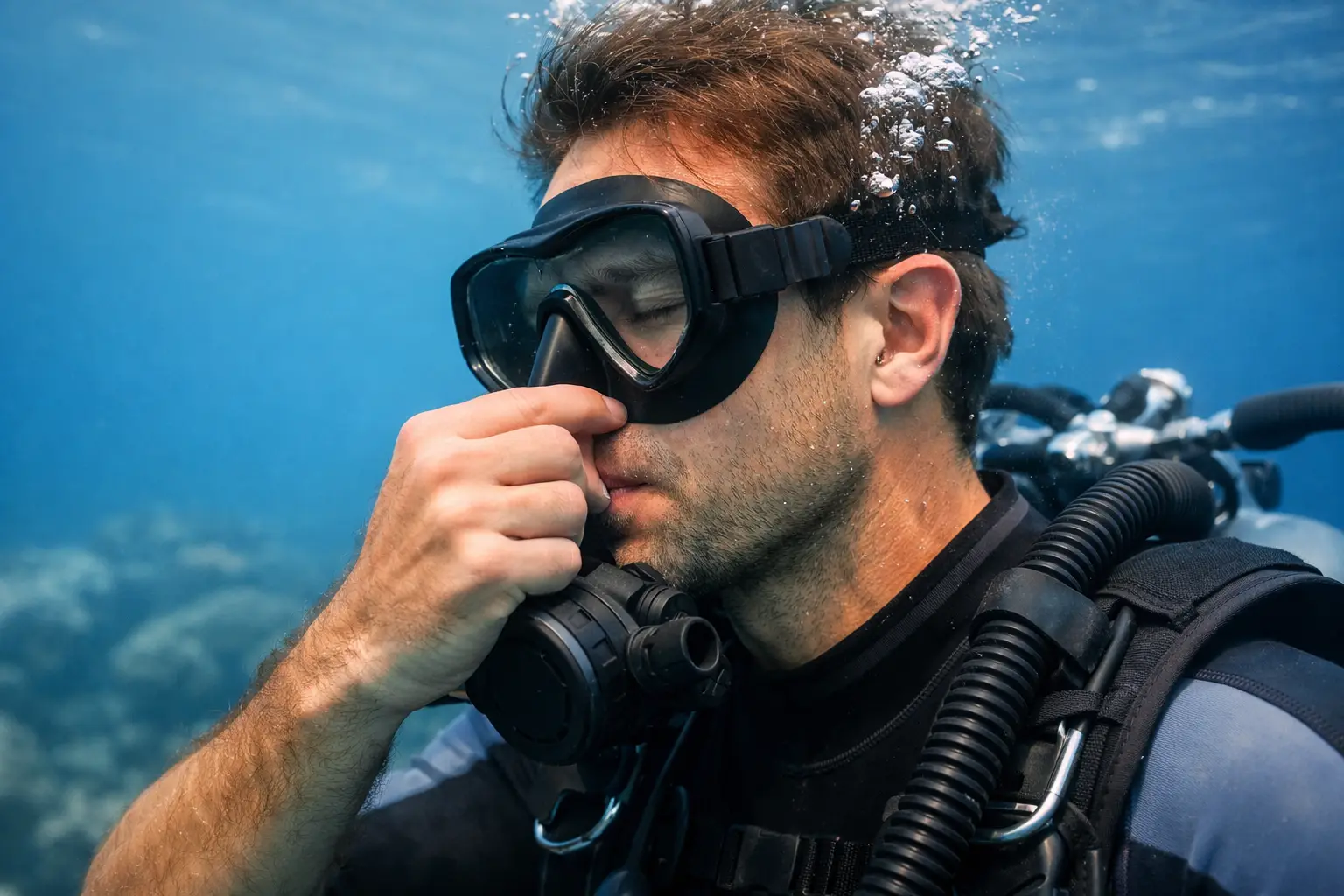
The most familiar method is the gentle Valsalva maneuver. Pinch your nose closed through your mask and blow very softly, as if trying to exhale through your nose. The key word is softly. Blasting air against a blocked nose can irritate your ears and will not solve a passage that is not opening.
If the Valsalva does not work right away, pause your descent. Look slightly upward rather than down, relax your shoulders, and try again with a lighter effort. Some divers find it easier to move their jaw from side to side, swallow, or make a gentle chewing motion while pinching their nose. Others can equalize by swallowing with their nose pinched, known as the Toynbee maneuver.
There is no prize for using the same method as the diver next to you. Your anatomy, hydration, stress level, and even the position of your head can affect what works. With practice, some experienced divers learn the Frenzel technique, which uses the tongue and throat muscles rather than chest pressure. It can be very effective, but it is best learned patiently with a qualified instructor rather than attempted forcefully during a vacation dive.
The rule that keeps ears safe: stop, go up, try again
If one ear will not clear, do not continue down hoping it will fix itself. Stop where you are, signal your buddy or guide, and ascend a few feet until the pressure eases. Then try to equalize again before resuming a slow descent.
That small ascent matters because it reduces the pressure difference around the eardrum. Once the discomfort has settled, you have a better chance of clearing gently. If the ear still will not equalize after a few relaxed attempts, end the descent. The ocean will still be there tomorrow. Forcing your way deeper can cause an ear barotrauma and turn the rest of your trip into dry-land recovery.
Make equalization easier before you enter the water
Good equalization begins well before the boat leaves the marina. Get enough sleep, drink water, and avoid rushing through breakfast or arrival paperwork. Stress can tighten the muscles around the throat and jaw, making a simple skill feel frustrating.
More importantly, do not dive when you are congested. A cold, sinus infection, allergy flare-up, or heavy nasal blockage can prevent the Eustachian tubes from opening normally. Even if a decongestant seems to help at the start, its effects can wear off underwater and create a problem on the way up. Medication decisions should be discussed with a medical professional who understands diving medicine, especially if you have recurring ear or sinus issues.
It also helps to practice on land. While sitting comfortably, pinch your nose and apply the lightest possible pressure, or practice swallowing with your nose pinched. You are learning the sensation of an open Eustachian tube, not trying to create a dramatic pop. Familiarity makes the skill feel much less intimidating when you are floating above a blue Caribbean drop-off.
Small adjustments that can make a big difference
Your body position matters more than many new divers expect. Descending feet first usually makes equalization easier because your head stays upright and you can stop quickly. If you are going down a line, hold it lightly and move at a pace that lets you clear frequently. A controlled descent is safer and more enjoyable than racing to catch up with the group.
A well-fitting mask is also part of the equation. As you descend, add a small amount of air through your nose to equalize the mask space. This is separate from clearing your ears, but both should happen early and often. If your mask is painfully squeezing your face, you may be forgetting this step.
Try not to clench your jaw or tense your neck. A relaxed exhale, a few jaw movements, and an unhurried pause can accomplish more than repeated forceful attempts. This is one reason small dive groups are valuable: you should have room to settle into your own rhythm instead of feeling pushed by a crowded descent.
What to do if you cannot clear one ear
One-sided difficulty is common. The right ear may clear easily while the left feels stubborn, or the reverse. First, stop descending and ascend slightly. Then tilt the blocked ear toward the surface and try your gentle method again. For example, if your left ear is blocked, tip your left ear upward while keeping your body stable.
Do not let a buddy pull you downward, and do not keep trying harder and harder. If you notice severe pain, dizziness, hearing changes, ringing, fluid, or bleeding, end the dive and seek medical evaluation. These symptoms are not something to push through for a second tank or a better photo.
A problem on descent can also become a problem on ascent. If you feel pressure or pain while ascending, slow down, stop if safe to do so, and descend a few feet to relieve it before attempting a gradual ascent again. This may be a reverse block, where expanding air cannot escape easily. Never force an ascent, but always follow your guide's direction and standard safe ascent procedures.
Common equalization mistakes to avoid
The most common mistake is waiting for pain. Equalize before the pressure becomes noticeable, particularly during the first part of the descent. The second is using too much force. Strong blowing can injure delicate ear structures and may actually close the passages you are trying to open.
Another mistake is diving through congestion because the day feels too special to miss. Punta Cana has stunning underwater sites, from colorful coral gardens to historic wrecks, but a missed dive is always better than an injured ear. Conditions, comfort, and readiness all matter more than a schedule.
Finally, avoid comparing yourself to other divers. Some people equalize effortlessly; others need more time or a different technique. A professional guide should recognize the difference between a diver who needs a calm pause and one who should call the dive.
Learn at a pace that feels right
For a first-time diver, ear pressure can be the most unfamiliar part of breathing underwater. A patient briefing and a slow, supervised descent often transform that nervous first moment into confidence. Certified divers benefit too, especially after a long break from diving or when trying a deeper wall, wreck, or cavern-style environment.
At Scuba & Chill, small groups of up to four divers allow instructors and guides to watch your descent, adjust the pace, and give you individual support without taking away the sense of adventure. The goal is not simply to get below the surface. It is to arrive comfortable enough to notice the schools of fish, the changing shades of blue, and the quiet that makes diving unforgettable.
Your ears are giving you useful information. Listen early, equalize gently, and give yourself permission to pause. The best underwater adventures begin with a descent that feels calm, controlled, and entirely your own.
Want to dive in the Dominican Republic?
Tell us your level, dates and what kind of experience you want. We will help you choose a dive, course or excursion.
Talk on WhatsApp