Lionfish in Punta Cana: Beauty, Venom, and Respect
Meet the lionfish of Punta Cana: how to recognize this striking reef predator, stay safe around its venomous spines, and dive with care and curiosity, too.
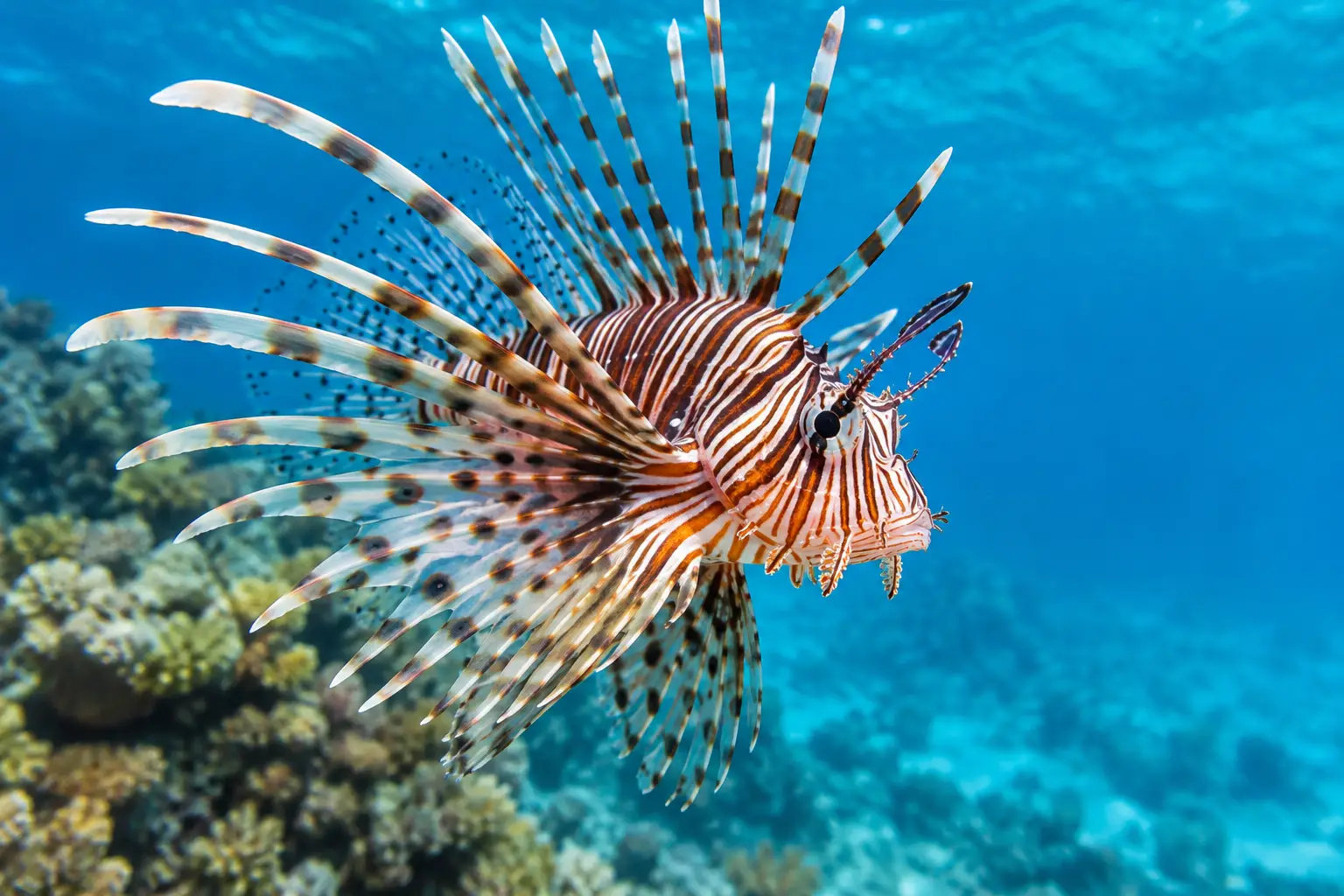
A striped fish hovering perfectly still beside a coral ledge can stop even an experienced diver mid-kick. If you searched for lionfish, you are likely looking for the lionfish: one of the Caribbean’s most photogenic, unusual, and misunderstood reef residents. Its flowing fins make it look almost delicate. Its venomous spines, and its impact on local reef life, tell a more complicated story.
For visitors diving in Punta Cana, a lionfish sighting can be a highlight of an underwater adventure. The right response is not fear, and certainly not a closer touch for a photo. It is calm observation, good buoyancy, and respect for an animal that is both beautiful and ecologically significant.
Lionfish and Lionfish: What Divers See on the Reef
“Lionfish” is a common search variation for lionfish, the name used by divers, marine biologists, and local reef teams. In the Caribbean, the species most often encountered are the red lionfish and devil firefish, both recognized by their reddish-brown and white bands, fan-like pectoral fins, and dramatic dorsal spines.
They often hold position near coral heads, under small overhangs, around wreck structures, or beside sponges. Unlike many reef fish that dart away as bubbles approach, lionfish may seem surprisingly unconcerned with divers. That stillness creates an incredible photo opportunity, but it can also tempt people to get too close.
A lionfish is not trying to attack you. It does not chase divers or hunt people. Its defense is simple: venomous spines along the dorsal, pelvic, and anal fins can cause a painful injury if the animal is touched, cornered, or accidentally brushed. The safest viewing distance is the one that lets you enjoy its shape and behavior without reaching toward it, blocking its escape route, or resting a hand on the reef nearby.
Why Lionfish Matter in Punta Cana
Lionfish are native to the Indo-Pacific, not the Caribbean. They became established in Atlantic and Caribbean waters through an invasion that has spread across much of the region. In their introduced range, they face fewer natural predators than they do in their native habitats and can reproduce quickly.
That matters because lionfish are highly capable hunters. They consume juvenile fish and crustaceans, including species that help keep reef ecosystems in balance. When lionfish numbers are high, pressure on young reef fish can affect the wider food web. Reefs already cope with warming water, storms, disease, pollution, and physical damage, so every added pressure deserves attention.
The story is not as simple as calling one fish “bad.” Lionfish are fascinating animals doing what predators do: finding food and surviving. The ecological issue comes from where they are and how rapidly their populations can grow outside their natural range. Responsible reef management focuses on protecting Caribbean biodiversity while avoiding sensationalism.
For divers, this is a reminder that a reef is not an aquarium. Every animal you see is part of a living system, and a thoughtful dive leaves that system undisturbed.
How to Observe Lionfish Safely
A close encounter with lionfish is usually safe when divers follow the same habits that protect every reef: control your buoyancy, maintain awareness, and keep your hands to yourself. Lionfish are often found in places where divers may be adjusting position around coral, wreck rails, or a sandy ledge, so spatial awareness matters as much as confidence.
Give the Fish Room
Stay far enough away that a sudden fin movement cannot bring you into contact with the spines. This is especially relevant when shooting photos with a large camera setup or when diving in a group. Avoid crowding the fish from several directions. One diver can observe, then make room for the next person.
Never attempt to fan its fins, guide it out of a hiding place, feed it, or pose with it. Besides the injury risk, these actions alter natural behavior and can damage the reef around the animal. A great lionfish photograph is one that shows the fish behaving naturally in its habitat.
Watch Your Hands, Knees, and Gear
Accidental contact is more likely than deliberate contact. A diver may back toward a ledge while checking a camera, kneel too close to a coral head, or let a dangling gauge brush an animal hidden in a crevice. Keep your equipment streamlined and check your position before moving backward or upward.
Good buoyancy is not only a skill for advanced divers. It is one of the most useful safety tools for every guest, including first-time divers. An attentive guide can point out reef life while helping the group maintain comfortable spacing from coral and marine animals.
If a Sting Happens
A lionfish sting should be treated seriously. Exit the water safely, alert your dive professional, and seek medical assessment as soon as possible. Venomous fish injuries can cause intense pain and may involve swelling, nausea, or other symptoms. Hot-water immersion is commonly used in first-aid response for heat-sensitive fish venom, but the correct approach depends on the individual, the injury, and available medical guidance.
Do not ignore a puncture because it looks small. Spines can break, wounds can become infected, and allergic reactions are possible. Your guide or instructor can help coordinate the next practical steps, but medical care should always take priority after a venomous injury.
Can Beginners Dive Where Lionfish Live?
Absolutely. Seeing lionfish does not make a reef dive inherently dangerous. They are part of everyday marine life across the Caribbean, along with sea urchins, fire coral, moray eels, and other creatures that reward observation rather than contact.
For a beginner, the most valuable preparation is a clear pre-dive briefing. You should know how to equalize, how to move slowly, why you should not touch marine life, and what to do if you feel uncomfortable underwater. You do not need to memorize every species before your first descent. You need a patient professional beside you and enough time to enjoy the experience without being rushed.
Small groups make a genuine difference here. With no more than four divers, a guide can adjust the pace, point out a lionfish without creating a crowded scene, and offer help before a minor buoyancy issue becomes stressful. That personal attention is especially valuable on reef dives where the details are the experience: a tiny cleaner shrimp, a turtle passing over the sand, a school of blue tangs, or a lionfish framed by soft coral.
At Scuba & Chill, guided dives are designed around that kind of calm, close attention to the Caribbean Deep. The goal is not to collect sightings as quickly as possible. It is to make each encounter feel safe, informed, and memorable.
The Right Mindset for Underwater Wildlife
The best divers are not necessarily the ones who go deepest or stay down longest. They are often the ones who notice more while disturbing less. A lionfish encounter is a good test of that mindset because the animal is so visually tempting. It invites a close look, yet it also asks for boundaries.
Bring curiosity, not a checklist. A lionfish may be resting in a coral crevice one day and nowhere to be found on the next. Reef conditions, depth, time of day, and the animal’s own behavior all shape what you see. No responsible operator should promise a specific wild animal on every dive.
If you do spot one, pause at a respectful distance. Notice the slow pulse of its fins, the pattern of its stripes, and the small fish that react to its presence. Then continue your dive with the same care you arrived with. The Caribbean gives its best moments to divers who know that wonder and respect belong together.
Want to dive in the Dominican Republic?
Tell us your level, dates and what kind of experience you want. We will help you choose a dive, course or excursion.
Talk on WhatsApp