The best Caribbean wrecks: 7 Wreck Dives Worth Planning
Searching for the best Caribbean wrecks? Plan a safer, more rewarding wreck dive from Punta Cana, with depth, certification, currents, and seasonal timing.
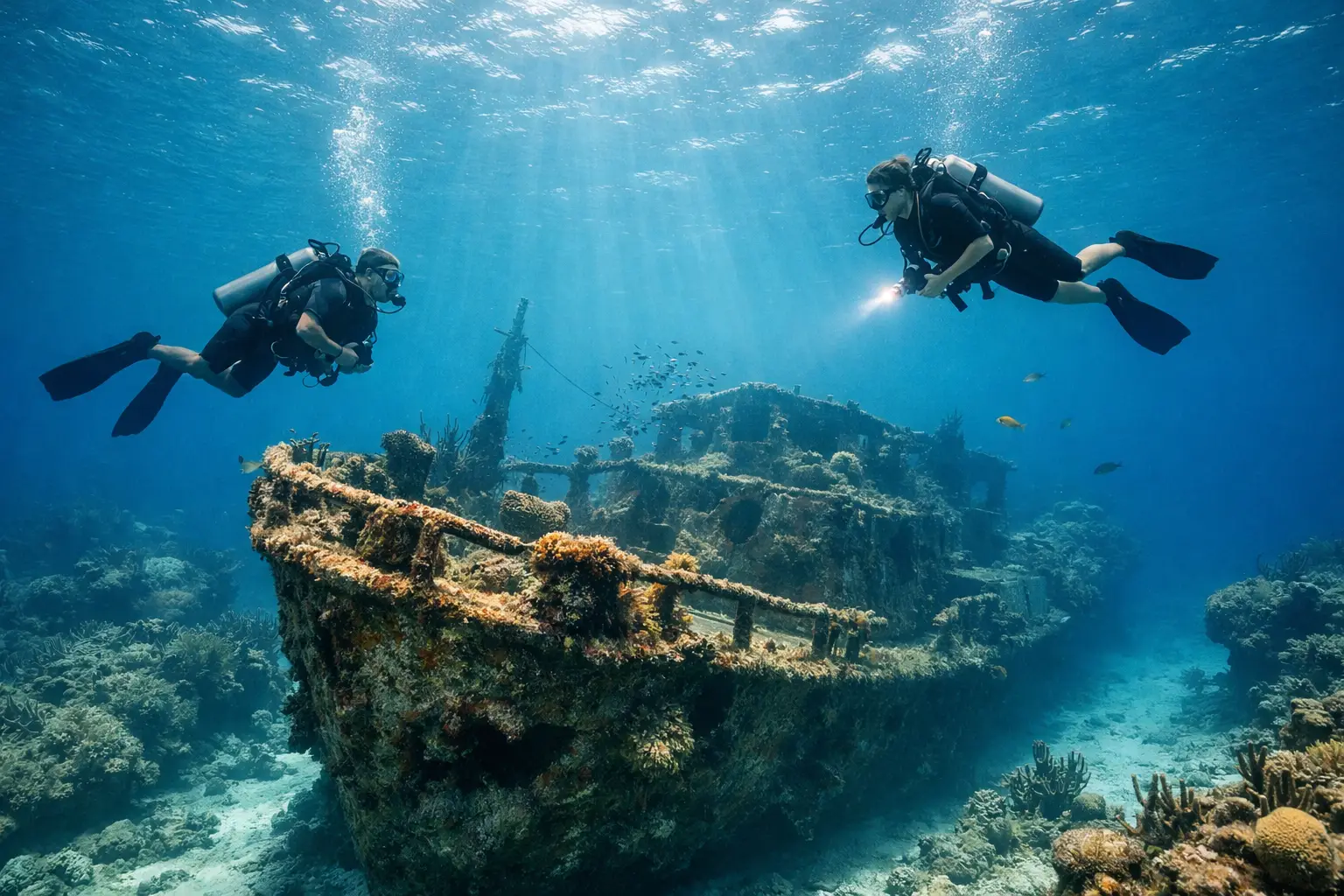
A wreck is never just a ship on the seafloor. It is a new reef, a shelter for schooling fish, a landmark shaped by current and time, and sometimes a serious technical environment. When travelers search for the best Caribbean wrecks, they are usually looking for more than a photo opportunity: they want that unforgettable moment when a silhouette appears through blue water and the Caribbean suddenly feels much deeper.
The best wreck dive depends on your certification, comfort in the water, and the kind of adventure you want. Some wrecks are bright, shallow, and ideal for a first certified dive. Others rest beyond recreational limits or require experience with current, overhead environments, and precise buoyancy. The reward is worth choosing carefully.
What Makes the Best Caribbean Wreck Dives?
A great wreck dive is not automatically the biggest or deepest vessel. Visibility, marine life, access, current, and the condition of the structure often matter more than the ship’s history alone. A wreck with soft coral, clouds of grunts, resident barracuda, and safe routes around its exterior can create a far stronger experience than a famous vessel that is difficult to reach on a rough day.
The Caribbean is especially suited to wreck diving because warm water supports fast coral growth. Over time, many wrecks become living structures rather than empty metal frames. Sponges take hold along railings, schooling fish gather in sheltered corners, and larger predators patrol the edges where blue water meets the reef.
For newer divers, the best choice is usually an upright wreck at moderate depth with a guide who knows its conditions. Experienced divers may prefer a deeper profile, stronger current, or a wreck combined with a wall or reef. Neither option is "better" in absolute terms. The right dive is the one that matches your training and leaves you with plenty of air, time, and confidence to enjoy it.
7 Caribbean Wreck Dives Worth Planning
St. George Wreck, Bayahibe, Dominican Republic
The St. George is one of the standout wreck experiences near Punta Cana. This former cargo ship was intentionally sunk off Bayahibe and now rests around 130 feet deep, making it a compelling option for Advanced Open Water divers or those training at that level under appropriate supervision.
Its scale is the first thing divers notice. The ship’s long profile creates a dramatic descent, while its exterior offers room to explore masts, deck structures, openings, and coral-covered surfaces without rushing. Depth means bottom time is limited, so a good plan matters. This is not the dive to spend ten minutes adjusting weights or chasing every passing fish.
Atlantic Princess, Bayahibe, Dominican Republic
Atlantic Princess offers a different kind of wreck character. This intentionally sunk vessel sits in a depth range that can be more accessible for certified recreational divers, depending on the exact route and conditions. Its structure has become a refuge for marine life, and the surrounding sandy bottom makes the wreck’s outline especially striking.
It is a strong choice for divers who want a wreck without committing to the deeper profile of St. George. Conditions still decide the day. Current, visibility, and your air consumption can change how much of the wreck is practical to see, which is why small groups and a guide-led plan make such a difference.
USS Kittiwake, Grand Cayman
The USS Kittiwake is often mentioned among the most photogenic wrecks in the Caribbean. Resting in relatively shallow water, it is well suited to divers who want long, bright bottom time and a chance to appreciate the vessel’s recognizable shape. Its white hull and open decks can be spectacular when sunlight pours through the water.
The accessible depth does not eliminate the need for good judgment. Penetration is a specialized activity, and a doorway is not an invitation to enter without the right training, equipment, and conditions. The exterior alone offers plenty to see.
Hilma Hooker, Bonaire
Hilma Hooker has a story almost as memorable as the dive itself. The cargo ship was seized after drug smuggling allegations and later sank at its mooring. Today, it lies on its side in deeper water near Bonaire, creating a bold, slightly eerie profile against the blue.
Because of its depth, this dive is best for advanced divers with solid buoyancy and air management. Bonaire’s generally calm conditions and clear water can make the wreck feel deceptively easy, but depth is still depth. A disciplined descent, conservative profile, and close attention to no-decompression limits are essential.
Antilla, Aruba
The Antilla is one of the Caribbean’s most recognizable large wrecks. This German freighter was scuttled during World War II and now sits in accessible water off Aruba. It is broad, heavily encrusted, and alive with fish, making it a favorite for divers who want both history and marine life in one immersion.
The wreck is large enough that it rewards a second visit. One dive may focus on the exterior and fish activity; another may reveal details around the deck and cargo areas. Its popularity can mean more boats and more divers, so going with a smaller group can help preserve the feeling of discovery.
Bianca C, Grenada
Known as the Titanic of the Caribbean, the Bianca C is a serious wreck dive rather than a casual vacation add-on. This former cruise ship rests deep off Grenada, and its size is extraordinary. The vessel is now broken and changed by storms, but that transformation is part of its appeal.
This dive demands experience. Depth, possible current, and the scale of the wreck call for advanced training and excellent control. It is a destination for divers who enjoy planning, not a site to choose simply because of its famous nickname.
Rhone, British Virgin Islands
The RMS Rhone combines dramatic history with reef-covered wreck scenery. The British mail ship sank during a hurricane in 1867, and its remains lie across multiple sections and depths. That layout makes it adaptable: some areas are appropriate for less experienced divers, while other portions offer more depth and complexity.
The Rhone is also a reminder that wrecks are cultural and historical sites, not underwater playgrounds to touch or remove from. Good wreck diving means observing closely while leaving the site exactly where it belongs.
Choosing Between St. George and Atlantic Princess
For visitors staying in Bávaro or Punta Cana, the St. George and Atlantic Princess are two particularly relevant options. They offer contrasting ways to experience the Caribbean Deep without needing an international flight between islands.
Choose St. George if you are an Advanced Open Water diver, comfortable with a deeper profile, and drawn to the drama of a large cargo ship. Choose Atlantic Princess if you want a more relaxed wreck experience with potentially greater flexibility in depth and bottom time. Your guide should make the final call based on sea conditions, certification, recent experience, and how you feel that day.
At Scuba & Chill, wreck dives are guided in groups of no more than four divers. That matters on a wreck. A smaller group allows a calmer descent, better communication, and more room to move around the structure without turning a living reef into a crowd scene.
How to Prepare for a Caribbean Wreck Dive
Wreck diving becomes more enjoyable when the practical details are handled before the boat leaves shore. Bring your certification card, discuss your most recent dives honestly, and tell your instructor or guide if you have not been underwater for a while. A refresher can be the difference between feeling distracted and feeling fully present.
Your buoyancy deserves special attention. Wrecks often have fragile coral growth, fishing line, sharp edges, and tight visual spaces. Staying horizontal, controlling your fins, and maintaining a safe distance protects both you and the site. It also gives you better photographs and a more relaxed air consumption rate.
Never enter a wreck unless you have the appropriate training, equipment, and a plan. Even an apparently open passage can hold silt, snag hazards, changing light, and confusing exits. There is no loss in staying outside. On many Caribbean wrecks, the best views are from a few feet away, where the full structure, fish life, and blue water can share the same frame.
A More Meaningful Way to See a Wreck
The finest wreck dives do not feel rushed. They leave space to watch a French angelfish disappear behind a rail, notice coral growing where cargo once moved, and understand that the ship is now part of the sea rather than an object placed in it.
Choose a wreck that suits your level, listen to the briefing, and let the experience unfold at the pace of your breathing. The Caribbean will still be there below the surface, quiet, colorful, and ready to tell its story.
Want to dive in the Dominican Republic?
Tell us your level, dates and what kind of experience you want. We will help you choose a dive, course or excursion.
Talk on WhatsApp