PADI Divemaster Dominican Republic Course
Choose a PADI Divemaster Dominican Republic course for small groups, real Caribbean experience, and a clear path to professional diving with confidence.
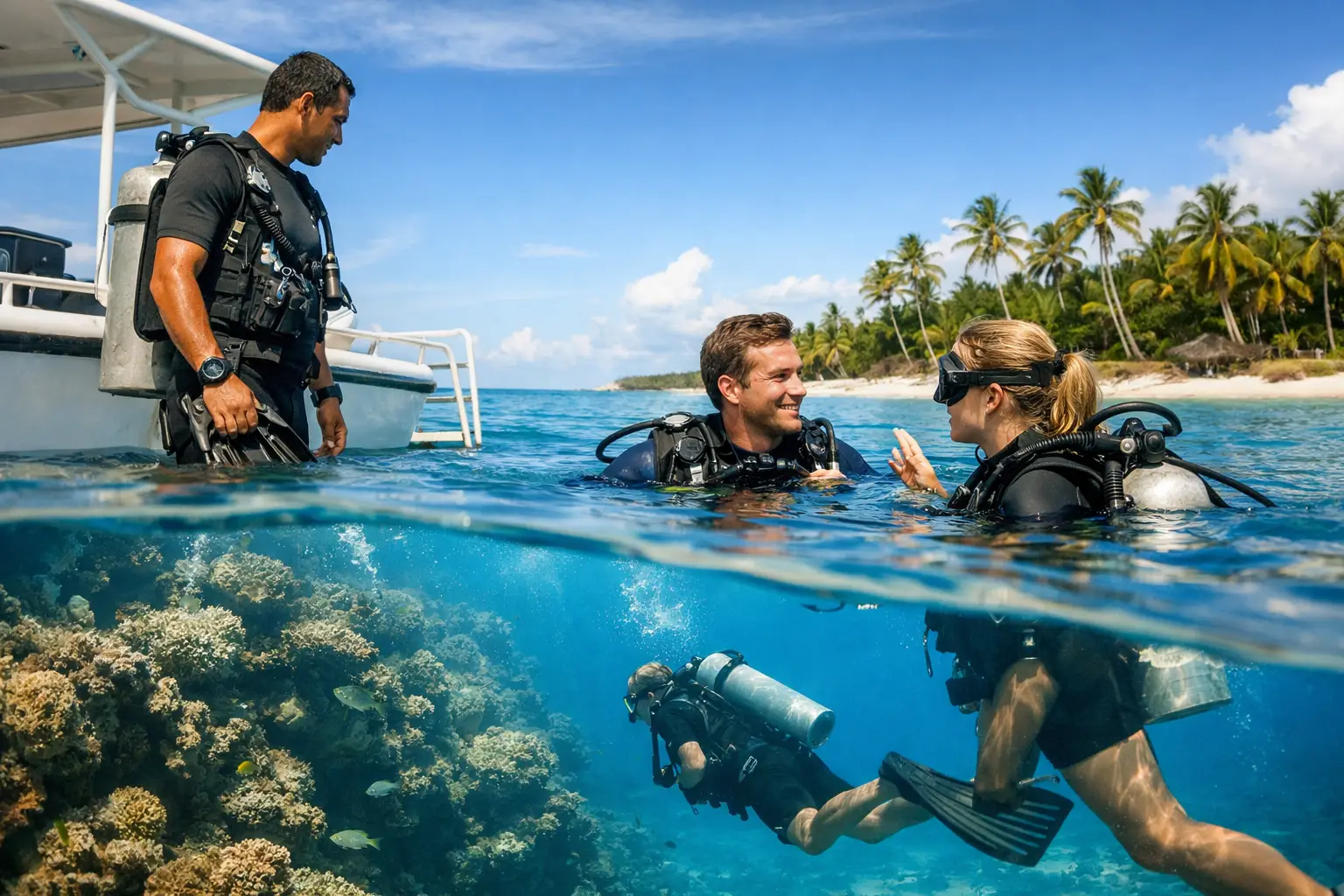
A PADI Divemaster Dominican Republic course is not simply a higher certification to add to your logbook. It is the moment you stop seeing the reef only as a guest and begin learning how to guide, protect, plan, and lead beneath the surface. In Punta Cana, that transition happens in warm Caribbean water, surrounded by coral formations, wrecks, changing conditions, and the kind of real-world experience that shapes confident dive professionals.
For travelers and experienced divers who want more than a quick course, the Dominican Republic offers an appealing balance: accessible conditions, varied dive sites, and enough adventure to keep every training day meaningful. The right program should feel personal, demanding in the best way, and supported by instructors who know that a Divemaster is responsible for people, not just certifications.
Is a PADI Divemaster Dominican Republic Course Right for You?
The Divemaster rating is PADI’s first professional-level certification. It is designed for certified divers who want to lead dives, assist instructors, supervise certain activities, and develop the judgment needed to work in the dive industry. Some candidates arrive with a clear goal of working in the Caribbean or traveling the world as a dive professional. Others want deeper skills, stronger confidence, and a more complete understanding of what happens behind every well-run dive.
Both motivations are valid. What matters is being ready to take ownership of your development. This is not a course where you simply follow an instructor from one skill to the next. You will plan dives, map sites, assist with students, practice briefings, refine rescue skills, and learn to recognize small details before they become problems.
Before beginning, PADI candidates generally need to be at least 18 years old, hold Advanced Open Water and Rescue Diver certifications, have current Emergency First Response training, and log at least 40 dives. Certification requires a minimum of 60 logged dives, plus successful completion of the program requirements and a medical statement. A reputable center will review your experience honestly and help you identify any steps needed before starting.
Why Train in Punta Cana and the Caribbean?
A Divemaster should be comfortable in more than one type of underwater environment. The Dominican Republic gives you a strong foundation because conditions are often welcoming while the dive menu remains varied. One day might focus on a calm reef, fish identification, and buoyancy control. Another can involve current awareness, deeper profiles, a wreck orientation, or managing a group with different air consumption and experience levels.
That variety matters. You are not training to memorize one route. You are learning to observe a site, read the conditions, anticipate diver behavior, and make conservative decisions that protect the entire group.
The Punta Cana area also makes training practical for visitors. You can stay in Bávaro, enjoy the coast above water, and still commit to a serious schedule underwater. At Scuba & Chill, small groups of up to four divers create more room for individual feedback, whether you need to improve your demonstration-quality skills or build comfort taking the lead during a briefing.
What You Will Actually Learn
The most visible part of Divemaster training is leading. You will learn how to welcome divers, check equipment, explain the plan, manage entries and exits, and keep a group together without turning the experience into a rigid march underwater. A calm, clear presence changes how safe and relaxed divers feel.
But the heart of the course is awareness. You will develop the habit of checking conditions before the boat leaves, evaluating diver readiness, monitoring gas and depth, and noticing when someone is cold, anxious, over-weighted, or drifting away from the plan. Good Divemasters are attentive without being intrusive.
You will also work on skills that must look controlled and easy. Demonstrating mask clearing, regulator recovery, neutral buoyancy, and rescue responses is different from merely completing them for yourself. Your instructor will help you turn familiar skills into examples that beginners can understand and copy.
From Dive Planning to Problem Prevention
Planning is where professional thinking becomes visible. A Divemaster considers the site, weather, surface conditions, currents, depth, diver certifications, air consumption, boat procedures, emergency equipment, and the simplest safe route for the group. The plan is not fixed once you enter the water. It must adapt when conditions or diver needs change.
This is why experience matters more than rushing. A candidate with 40 dives may be eligible to start, but someone who uses the training period to log a wider range of dives will leave better prepared. If you are short on experience, building dives before or during the program can be a smart choice rather than a delay.
Learning to Assist, Not Just Watch
During training, you may assist with student divers under instructor supervision. This is one of the most valuable parts of the program because it reveals how differently people learn. One student needs a simple explanation on the boat. Another needs extra time at the surface. Someone else may understand the skill perfectly but need reassurance before trying it.
The goal is never to push someone through a task. It is to support learning while protecting standards and safety. That balance is what turns a skilled recreational diver into a reliable professional.
Choosing the Right Course Format
A short, intensive Divemaster course can suit a diver who already has extensive recent experience, strong rescue skills, and time to train every day. For many candidates, however, a longer format creates better results. It gives you time to absorb feedback, repeat skills, see different sites, and develop consistency rather than performing well once.
Ask how much actual in-water practice is included, how many candidates train with each instructor, and whether you will have opportunities to lead real certified divers under supervision. Also ask how the center handles your personal goals. A future working Divemaster may need more exposure to logistics and customer service, while a serious recreational diver may want more focus on leadership, navigation, and self-reliance.
There is a trade-off between speed and depth. Finishing quickly can fit a vacation schedule, but professional confidence comes from repetition and honest coaching. Choose the format that gives you enough time to become capable, not just eligible.
The Caribbean Professional Mindset
Training in the Caribbean comes with a responsibility to the environment that makes the experience possible. A Divemaster should model excellent buoyancy, avoid touching coral, manage groups so they do not crowd marine life, and explain why respectful behavior matters. These are not extra details. They are part of leading divers well.
The most memorable dives in the Dominican Republic can include colorful reefs, dramatic walls, historic wrecks, sharks in appropriate conditions, and freshwater cave or cenote environments. Each setting deserves a different level of preparation and respect. A professional knows when a site is suitable for a group and when the better decision is to change the plan.
That decision-making is especially valuable for guests on vacation. They may be excited, tired from travel, new to the ocean, or eager to do more than their experience allows. Your role is to keep the adventure enjoyable without compromising the margin of safety.
Arrive Ready to Learn
You do not need to arrive perfect. You do need to arrive open to feedback, organized with your dive records and medical documentation, and willing to practice fundamentals until they become natural. Refresh your rescue skills if they have been sitting unused. Review basic dive theory. Spend time in the water before the course if possible, especially working on buoyancy, trim, navigation, and calm ascents.
Bring curiosity as well. Ask why a briefing is structured a certain way, why the boat crew places equipment where it does, and how your instructor decides when conditions are no longer appropriate. The answers will teach you as much as any manual.
A Divemaster course in the Dominican Republic can become a career step, a personal milestone, or the beginning of a more informed relationship with the ocean. Give yourself the time to learn the quiet skills behind great leadership: preparation, observation, patience, and the confidence to make the safe call when it matters.
Want to dive in the Dominican Republic?
Tell us your level, dates and what kind of experience you want. We will help you choose a dive, course or excursion.
Talk on WhatsApp