PADI eLearning Versus Classroom Training Compared
Compare PADI eLearning versus classroom training for your Punta Cana course, from flexibility and support to the best fit for your first dives for divers.
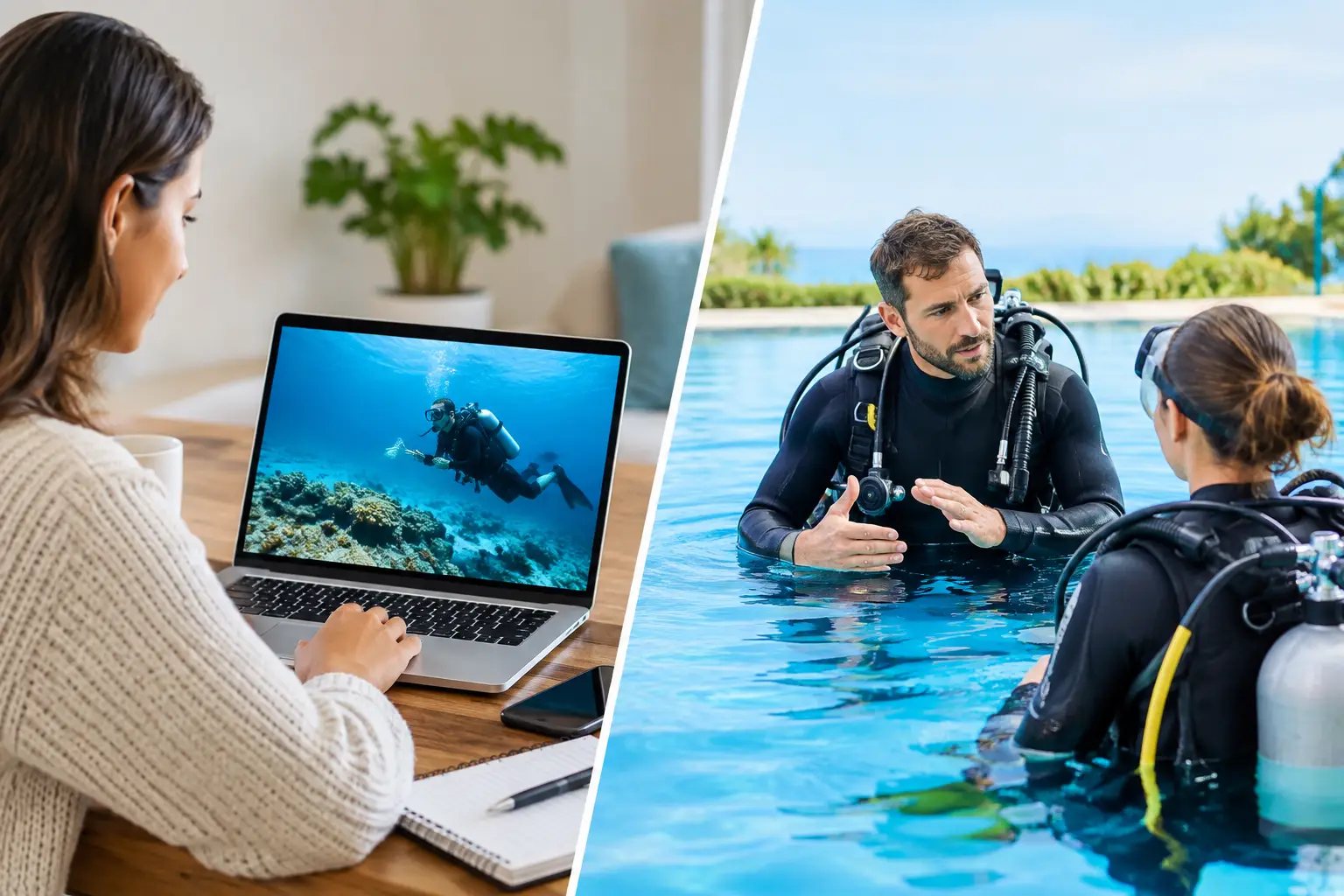
Your first look beneath the surface of Punta Cana should feel exciting, not rushed by a classroom schedule. Choosing between PADI eLearning versus classroom training is less about which option is “better” and more about how you want to spend your vacation time, how you learn best, and the support you want before entering the Caribbean.
Both paths lead to the same essential goal: becoming a capable, safety-minded diver under the guidance of a certified PADI Instructor. The academic format changes, but the standards do not. You will still need to understand the skills, complete the required water sessions, and demonstrate that you can dive safely and comfortably.
How PADI eLearning and classroom training work
A PADI course combines knowledge development with practical skill practice and open-water diving. The knowledge portion covers subjects such as pressure, buoyancy, equipment, dive planning, and how to respond to common situations underwater. Whether you study online or in person, your instructor checks your understanding and makes sure the information applies to real dives.
With PADI eLearning
PADI eLearning lets you complete the theory through digital materials before your trip or during downtime at your hotel. You can work through sections at your own pace, repeat videos or explanations, and pause when you need a break. For many travelers, that means arriving in Punta Cana ready to focus on the pool sessions and the rewarding part: breathing underwater over a living reef.
It is especially useful when vacation days are limited. Instead of spending a long block of daytime hours reviewing chapters indoors, you can finish much of the academics at home. You may still meet with your instructor to review questions, complete required assessments, and connect the lessons to the conditions you will encounter locally.
With classroom training
Classroom training places the learning in a face-to-face setting. Your instructor presents the material, answers questions as they arise, and can adapt the pace for the group. Some people retain information better when they can hear an explanation, discuss it out loud, and ask for a different example immediately.
This format can be a strong choice if you prefer structure or feel uneasy learning a technical subject alone. It also suits travelers who decide to take a course after arriving and have enough time in their schedule. The trade-off is simple: classroom hours take place during your vacation, so you will want to leave room for them when planning beach time, excursions, and rest.
PADI eLearning versus classroom training in the water
The biggest difference happens before you put on a mask. Once you begin practical training, both options require the same care, patience, and attention to detail. No online module replaces hands-on coaching for skills such as clearing water from a mask, recovering a regulator, controlling buoyancy, or sharing air with a buddy.
A good instructor will not treat eLearning students as though they have already finished the hard part. Digital study builds familiarity, but comfort is developed through practice. If you need extra time with a skill, the right response is more guidance, not pressure.
For classroom students, the advantage is that the instructor may already know where you have questions before reaching the water. For eLearning students, the advantage is that the instructor can spend less time repeating basic theory and more time personalizing the review. In either case, small groups make a meaningful difference. You can ask questions, practice at a calm pace, and receive feedback that is specific to you.
Who benefits most from eLearning?
PADI eLearning tends to work best for independent, organized travelers. If you enjoy learning from videos and reading at your own pace, it can make your course feel more relaxed once you arrive in the Dominican Republic. It is also a practical fit for couples with different schedules, parents fitting study around family plans, or visitors who want to protect their daytime hours for the ocean.
Choose eLearning if you can realistically set aside time before departure. Starting the night before your flight often creates unnecessary stress. Give yourself several short sessions over a week or two, and make notes of anything you want to discuss with your instructor. You do not need to memorize every detail. You do need to engage with the material honestly.
E-learning is not always the ideal route for someone who dislikes screens, struggles to stay focused without a fixed schedule, or has many questions that only make sense in conversation. There is no prize for choosing the most independent format. The best choice is the one that helps you arrive calm, prepared, and ready to learn.
Who should choose classroom training?
Classroom training is often the better fit for learners who value direct conversation and a predictable rhythm. If English is not your strongest language, if you are nervous about the science behind diving, or if you simply prefer a human explanation over a screen, an instructor-led session can build confidence quickly.
It can also be a good choice for families or friends learning together. Discussing a topic as a group may make the experience more memorable, especially when everyone has a different concern. One person may want to understand equalization, another may be curious about marine life, and someone else may want reassurance about the equipment. A thoughtful instructor can address those questions in context.
The practical consideration is time. Classroom learning usually asks for a larger uninterrupted portion of your itinerary. If you are staying only a few days and want to explore Isla Saona, relax on the beach, or enjoy a private outing, eLearning can give your schedule more breathing room.
What should not change with either option
Your academic format should never change the level of safety or personal attention you receive. A quality PADI course includes properly maintained equipment, a clear pre-dive briefing, realistic pacing, and an instructor who welcomes questions. You should understand what will happen in the pool or confined-water session, what is expected on the open-water dives, and what to do if you are not comfortable with a skill.
It also helps to be honest about your health, swimming comfort, and previous experiences in the water. Being a beginner is completely normal. Pretending to feel more confident than you are is not necessary and does not help anyone. The strongest learning environment is one where you can say, “Can we practice that again?” and receive a patient answer.
At Scuba & Chill, small groups of no more than four divers allow instructors to keep that attention personal, whether you arrive with eLearning completed or prefer a more guided academic approach. The point is not to move people through a course quickly. It is to help them enjoy the Caribbean with the judgment and confidence that responsible diving requires.
Plan your course around the vacation you want
If your goal is to maximize time in the water during a short Punta Cana stay, complete PADI eLearning before traveling and reserve your on-site energy for skill practice and open-water dives. Bring your questions with you, sleep well before training days, and avoid scheduling a late night before an early dive.
If you have a flexible itinerary and learn best with an instructor beside you, classroom training can turn the theory into a reassuring part of the experience rather than an obligation. Ask in advance how much time the academic portion will require, how the practical sessions are scheduled, and whether weather conditions could affect the order of dives.
The best training choice is the one that leaves you present for the moments that matter: your first calm breath underwater, the first time you hover without touching the reef, and the quiet realization that the Caribbean is far more alive below the surface than it ever looked from shore.
Want to dive in the Dominican Republic?
Tell us your level, dates and what kind of experience you want. We will help you choose a dive, course or excursion.
Talk on WhatsApp