PADI Rescue Diver Course Guide for Punta Cana
This PADI Rescue Diver course guide covers prerequisites, real-world skills, training days, and personalized preparation for Punta Cana divers today.
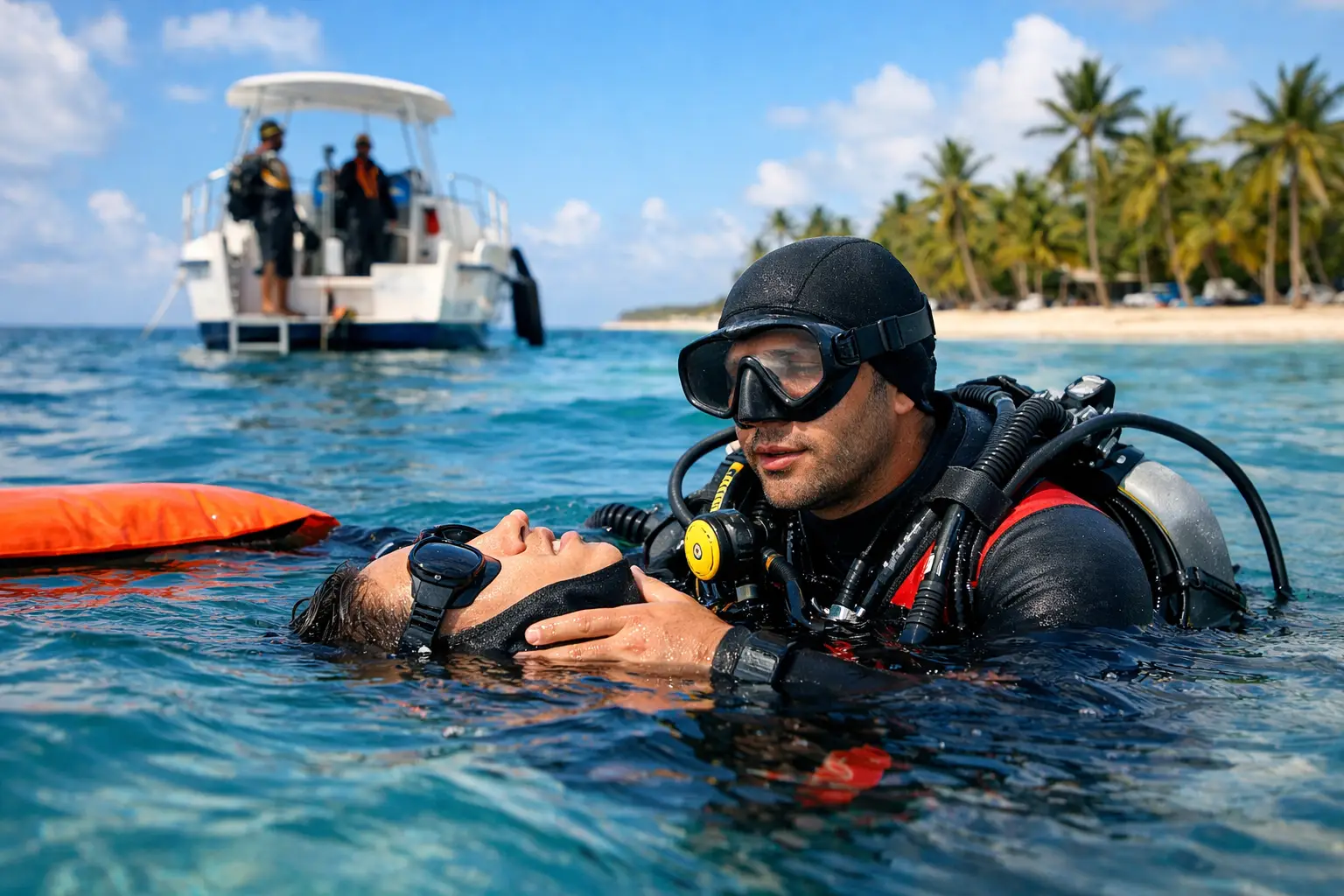
A dropped mask, a tired buddy, an anxious diver at the surface - these are the moments that change how you see the ocean. This PADI Rescue Diver course guide is for certified divers who want to move beyond simply enjoying the reef and become the calm, capable person others are glad to have nearby.
Rescue Diver is one of PADI’s most rewarding courses because it makes every future dive feel more intentional. You learn to spot small problems before they become urgent, respond with purpose when conditions change, and support your buddy without losing your own awareness. In Punta Cana, that training happens in warm Caribbean water, but the skills are designed for wherever your next underwater adventure takes you.
What the PADI Rescue Diver Course Actually Teaches
The course is not about expecting disaster on every dive. It is about building awareness, judgment, and practical habits. A strong Rescue Diver is observant before entering the water, attentive during the dive, and composed when helping another person at the surface.
You will practice recognizing stress in divers, assisting a tired diver, responding to panic, searching for a missing diver, and managing simulated emergency scenarios. You will also work on how to bring an unresponsive diver to the surface and provide assistance while exiting the water. These exercises can sound intense on paper. With a patient instructor, clear briefings, and repeated practice, they become structured skills rather than frightening unknowns.
The course also strengthens the quieter abilities that matter just as much: planning dives conservatively, checking equipment with care, communicating clearly, and making the decision to stop a dive when that is the safest option. Rescue training does not make you reckless or overly confident. Done well, it makes you more thoughtful.
Prerequisites Before You Start
To enroll, you generally need to be at least 12 years old and hold a PADI Advanced Open Water Diver certification, or an equivalent qualifying certification from another recognized agency. You must also have completed Emergency First Response Primary and Secondary Care, or a comparable CPR and first-aid course, within the previous 24 months.
If your first-aid training is no longer current, it can usually be refreshed before or alongside your Rescue Diver training. This matters because rescue skills do not end at the boat ladder or shoreline. Knowing how to assess a situation, contact emergency support, and provide basic care is part of becoming a more prepared dive partner.
You do not need to be an elite athlete, but you should be comfortable in the water and able to manage your own basic dive skills. If you have not dived for a while, a refresher beforehand is a smart choice. It lets you spend the Rescue course focused on new scenarios instead of trying to remember buoyancy fundamentals or equipment setup.
Medical forms and honest preparation
Expect to complete a medical questionnaire before beginning. Certain health conditions or medications may require physician approval. Be direct about your health history and current comfort level. The safest training is never rushed, and a good instructor will adapt explanations and practice time to what you genuinely need.
How Long Does Rescue Diver Training Take?
Most travelers complete the course over three to four days, depending on the schedule, prior first-aid certification, weather, and how much time they need to feel confident with each exercise. Some portions can be completed before your trip through PADI eLearning, which leaves more vacation time for in-water practice.
The academic section explains how stress develops, how emergencies are managed, and how to think through different rescue situations. In confined-water sessions, you build the individual skills step by step. Open-water scenarios then bring those skills together in realistic sequences where you assess, communicate, search, assist, and respond.
There is a trade-off in trying to compress the course into the shortest possible window. An intensive schedule can work well for an experienced, recently active diver who arrives prepared. But a little more time often creates better results, especially if you are rebuilding confidence or want room to absorb the lessons between sessions. Rescue training should feel challenging and energizing, not like a race against the clock.
What Makes the Course Challenging - and Worth It
Many divers say Rescue Diver is the first course that asks them to think beyond their own mask, air supply, and camera. You may be managing a scenario while tired, swimming at the surface, giving directions, or dealing with equipment that is not positioned perfectly. That is deliberate. Real problems are rarely tidy.
The physical side can be demanding, particularly surface tows and assisting an unresponsive diver. Technique makes a major difference. A trained instructor will show you how to use buoyancy, positioning, and efficient movement instead of relying on strength alone.
The emotional challenge is equally valuable. Simulated stress can reveal how you react when multiple tasks compete for attention. You learn to pause, assess, and take the next useful action. That calm does not come from memorizing a script. It comes from practicing enough that your response becomes organized under pressure.
A PADI Rescue Diver Course Guide for Caribbean Conditions
Punta Cana offers comfortable water temperatures, clear visibility, and a variety of environments that make training engaging. Reef sites provide controlled conditions for skill practice, while changing current, surface activity, or visibility can offer useful reminders that every dive requires a fresh assessment.
Warm water does not eliminate risk. Hydration, sun exposure, boat movement, fatigue from travel, and long days of vacation activities all affect readiness. A responsible Rescue Diver course includes those real-world considerations in the conversation. The goal is not to make the Caribbean feel dangerous. It is to make you better at noticing what conditions and people are telling you.
Training in a small group is especially helpful here. You receive more turns in each scenario, more direct feedback, and less time waiting while others practice. At Scuba & Chill, groups are limited to four divers, creating the space for individual coaching without losing the shared teamwork that makes rescue scenarios meaningful.
What to bring and how to arrive ready
Bring your certification cards or digital credentials, logbook if you use one, current first-aid documentation, swimwear, and a willingness to participate fully. Complete any assigned knowledge development before the first practical session. Get a good night’s sleep, drink water throughout the day, and avoid treating a late night out as harmless because the water is warm.
Your instructor should provide a clear plan for meeting times, gear, transportation, and the training sequence. In a destination setting, those details matter. Included equipment and transportation from Bávaro remove unnecessary friction, allowing you to focus on the course rather than vacation logistics.
Is Rescue Diver Right for You?
Rescue Diver is a natural next step if you are an Advanced Open Water Diver who wants greater confidence, plans to dive regularly, or is curious about the path toward Divemaster. It is also an excellent course for couples and friends who dive together often. You become more capable partners, with a shared language for preparation and safety.
It may be better to wait if you still feel uneasy with basic buoyancy, mask clearing, regulator recovery, or managing your gear. That is not a setback. A refresher or a few enjoyable guided dives can rebuild those foundations first. Rescue Diver is most rewarding when you have enough comfort underwater to direct your attention toward another diver.
For experienced divers, the course remains valuable because it refreshes skills that are easy to discuss but less common to practice. Even divers with many logged dives can benefit from a scenario that asks them to slow down, communicate, and reassess their habits.
The best reason to take Rescue Diver is simple: you want to be more useful underwater. Bring your curiosity, ask every question that comes to mind, and give yourself enough time to practice well. The reef will still be beautiful, but you will return to it with sharper awareness, steadier confidence, and a deeper respect for every buddy beside you.
Want to dive in the Dominican Republic?
Tell us your level, dates and what kind of experience you want. We will help you choose a dive, course or excursion.
Talk on WhatsApp