Open Water depth limit Explained
Understand the Open Water depth limit, why 60 feet matters, and how to plan safer, calmer reef dives in Punta Cana with a local PADI guide.
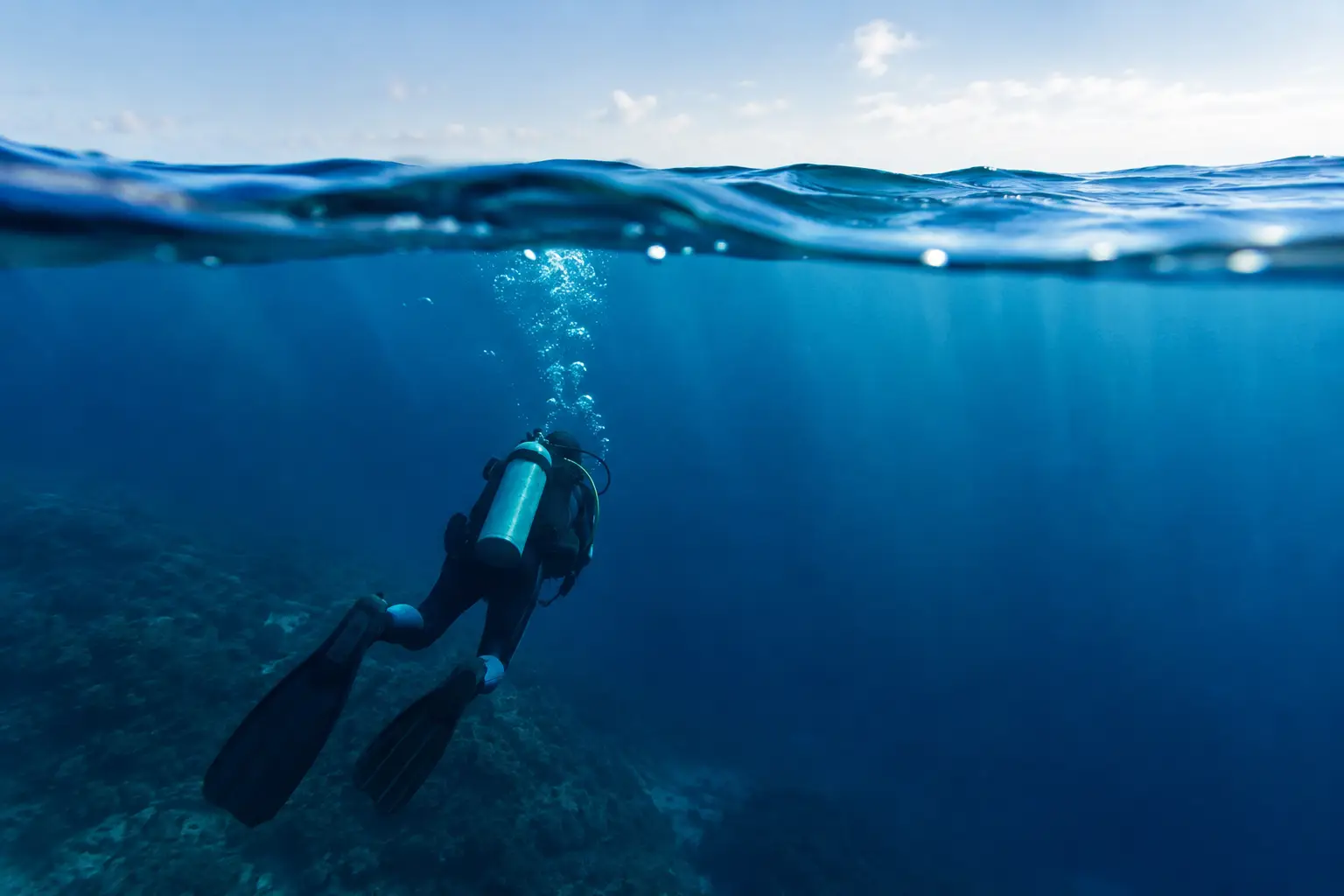
The Open Water depth limit is 60 feet, or 18 meters, for divers certified as PADI Open Water Divers. That number is more than a rule to memorize before a vacation dive. It defines the underwater environments you can explore independently, the conditions your guide must consider, and the skills that keep a beautiful Caribbean descent relaxed rather than rushed.
In Punta Cana, 60 feet can take you far beyond a shallow beach reef. It can mean cruising along coral gardens, hovering beside schools of blue tang, watching a stingray disappear into the sand, or following a reef slope toward the deeper blue. The best dive is not automatically the deepest one. It is the one that matches your certification, comfort level, air consumption, and the day’s sea conditions.
What is the maximum depth for Open Water divers?
For a standard PADI Open Water Diver certification, the recreational depth limit is 60 feet / 18 meters. This is the depth you are trained to reach after completing the course’s academic, confined-water, and open-water requirements.
A PADI Junior Open Water Diver has more conservative limits. Divers ages 10 and 11 are limited to 40 feet / 12 meters, while Junior Open Water Divers aged 12 to 14 may dive to 60 feet / 18 meters with an appropriately certified adult or PADI Professional. These limits are designed around developing skills, maturity, supervision, and the practical realities of diving with younger divers.
Your certification limit is not a target. It is a ceiling. A responsible plan may stay well above it because of current, visibility, a new buddy pairing, a first ocean dive after a long break, or simply because the best coral life is shallower that day. On many Caribbean reefs, 35 to 50 feet offers long bottom times, bright color, and plenty to see.
Why 60 feet is a meaningful limit
Pressure increases quickly underwater. At 33 feet, the pressure is already twice what it is at the surface. At 60 feet, it is nearly three times surface pressure. That affects how quickly you use air, how you equalize your ears and mask, and how much nitrogen your body absorbs.
Depth also changes the character of the dive. Colors fade, especially reds and oranges. Natural light drops. A mild current can feel more demanding. Your no-decompression time becomes shorter than it would be in shallow water, meaning you need to track your computer and ascent plan with more attention.
None of this means that 60 feet is inherently dangerous. It means it deserves the calm, deliberate habits you learned during training: descend slowly, equalize early and often, check your gauges, stay close to your buddy, and ascend with control.
The depth on your card versus the depth you should dive
Certification tells a dive professional what training you have completed. It does not reveal everything about your readiness on a particular morning. Someone certified last week may be fully within the Open Water limit but still benefit from an easy, shallow reef dive. A diver with 40 logged dives might comfortably manage 60 feet, yet choose a 45-foot profile to enjoy more time photographing coral.
The right depth depends on several factors working together. Experience matters, but recent experience matters too. If your last dive was two years ago, a refresher and a gentle first dive can rebuild confidence quickly. Your air consumption is also personal. A relaxed diver with efficient buoyancy may have a very different bottom time from a nervous diver at the same depth.
Conditions deserve equal weight. Clear, calm water can make a dive feel effortless. Surge, current, reduced visibility, or surface chop can raise the workload even when the depth is modest. A good guide adjusts the plan instead of forcing a site to fit a schedule.
At Scuba & Chill, small groups of no more than four divers make that flexibility possible. Rather than moving a large group through one fixed route, the guide can pay attention to equalization, buoyancy, air, comfort, and the natural rhythm of the people in the water.
How to plan a safe Open Water depth profile
A safe dive begins before you touch the water. Confirm the planned maximum depth with your guide, especially if you are booking a reef, wall, wreck, or shark-point experience. Ask what the usual depth range is, whether there can be current, and what alternatives are available if conditions change.
You should also be honest about your recent diving. There is no advantage in claiming confidence you do not feel. Tell your instructor or guide if you have trouble equalizing, tend to use air quickly, are returning after time away, or feel anxious about descending into blue water. That information helps create a better plan, not a judgment.
Once underwater, use your computer as your primary reference. Your guide knows the site, but you are responsible for monitoring your depth, remaining air, and no-decompression limit. Stay within visual contact of your buddy and guide, and signal early if something feels off. Waiting until low air, ear discomfort, or anxiety becomes urgent takes away options.
A thoughtful profile generally starts with the deepest point of the dive, then gradually moves shallower. This allows you to explore deeper sections while your available no-decompression time is greatest, then enjoy the reef as you make your way up. A safety stop near 15 feet for at least three minutes is standard practice on recreational dives and an unhurried chance to review the experience before surfacing.
What happens if a site is deeper than 60 feet?
Many well-known Caribbean walls and wrecks extend far below the Open Water limit. That does not necessarily mean an Open Water Diver cannot visit them. It means the dive must remain within the depth allowed by the diver’s certification and the operator’s procedures.
A wreck may begin at 45 feet and continue to 90 feet. In that case, an Open Water Diver may be able to see the upper structure, exterior features, and surrounding marine life while staying at or above 60 feet. The deeper portions remain for divers with additional training and an appropriate plan.
A wall dive works similarly. You may glide along the reef edge at 50 or 60 feet and look into the deep blue without descending down the wall. It is often a spectacular perspective: coral in front of you, open ocean beside you, and sunlight rippling overhead.
Do not confuse depth certification with wreck penetration training. Entering an overhead environment, even a shallow wreck, requires specialized preparation, equipment awareness, and procedures. Looking at a wreck from the outside can be extraordinary. Going inside is a different activity with different risks.
Moving beyond the Open Water depth limit
If deeper diving appeals to you, continue your education for the right reasons: better skills, stronger judgment, and access to sites that genuinely suit your interests. The PADI Advanced Open Water Diver course includes a Deep Adventure Dive and can qualify divers to go to 100 feet / 30 meters. It is often a natural next step for certified divers who want to experience deeper reef slopes, larger wrecks, and more varied Caribbean sites.
For divers who want focused experience at greater depths, the PADI Deep Diver specialty can extend the recreational limit to 130 feet / 40 meters. That added range comes with more planning, more precise buoyancy control, closer gas management, and a greater need to understand how depth affects narcosis, light, air use, and no-decompression limits.
More depth is not a badge of honor. It is a tool for specific dive environments. Some of the Caribbean’s most memorable encounters happen in 20 feet of water: a turtle grazing on seagrass, a juvenile fish sheltering in soft coral, or a ray lifting off from the sandy bottom. Progress when you are curious and ready, not because a number feels like a milestone.
Make the Caribbean feel comfortable, not intimidating
The ocean rewards unhurried divers. Before your next Punta Cana dive, check your certification level, share your experience openly, and choose a site with a depth profile that feels exciting without pushing your comfort zone. A professional guide can show you remarkable life within the Open Water limit while helping you build the confidence for whatever comes next.
The Caribbean Deep is always there. Start with the depth where you can breathe slowly, look around, and truly enjoy it.
Want to dive in the Dominican Republic?
Tell us your level, dates and what kind of experience you want. We will help you choose a dive, course or excursion.
Talk on WhatsApp