Scuba Diving Punta Cana: Choose Your Best Dive
Plan scuba diving Punta Cana with small groups, PADI guidance, full equipment, and reef, wreck, wall, and shark adventures for every level on your vacation.
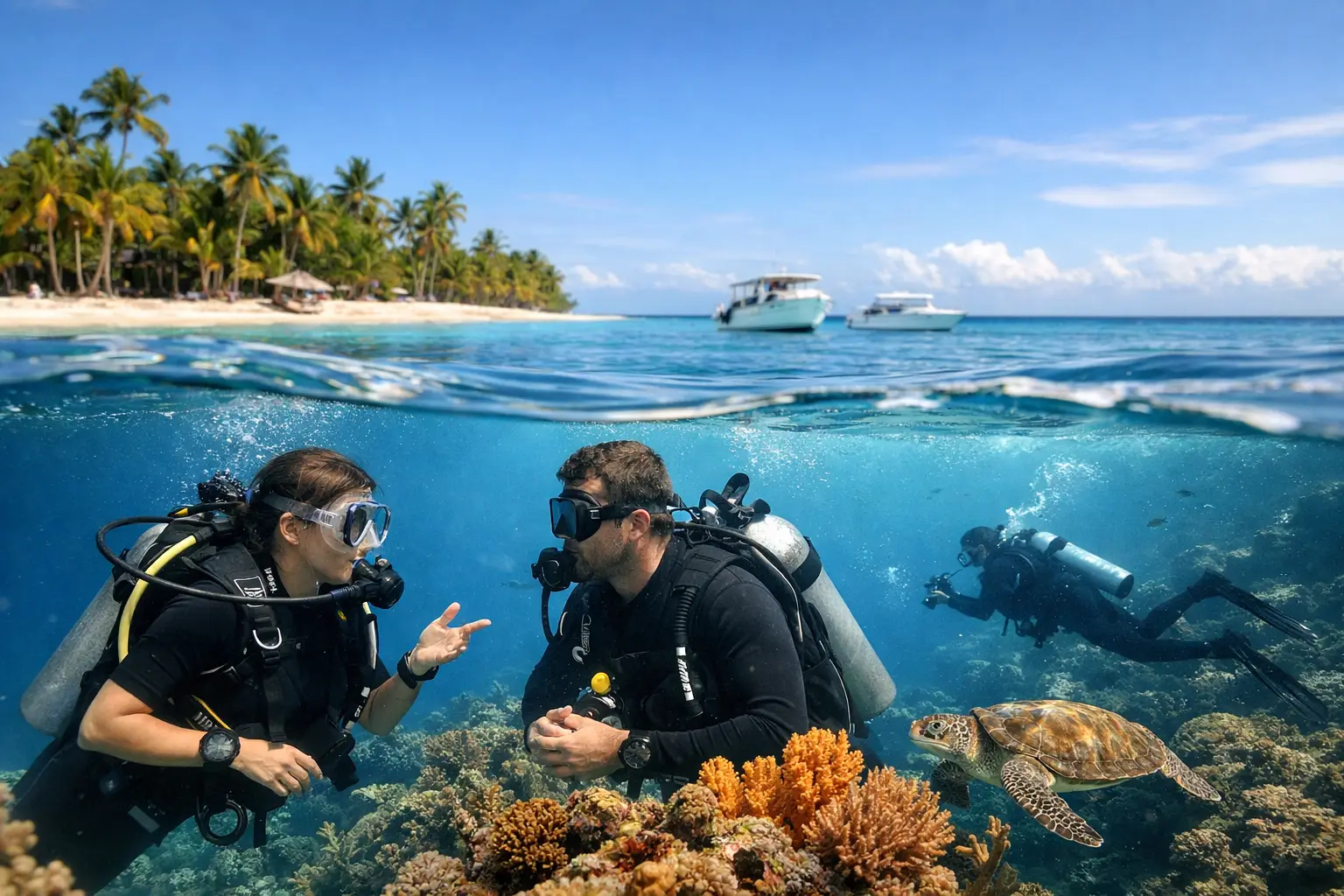
The first breath underwater changes the rhythm of a Punta Cana vacation. The beach noise fades, your breathing becomes calm and measured, and the Caribbean reveals coral gardens, schools of tropical fish, dramatic walls, and wrecks with stories of their own. Scuba diving Punta Cana can be an easy first experience or a serious day of exploration - but choosing the right dive matters as much as choosing the destination.
This coast is not a one-size-fits-all dive destination. A first-time visitor may want a shallow, unhurried reef with an instructor close by. A certified diver may be looking for the silhouette of the St. George Wreck, a wall dropping into blue water, or the anticipation of Shark Point. The best experience starts with an honest conversation about your comfort, certification, and the kind of underwater memory you want to take home.
What makes scuba diving in Punta Cana special?
Punta Cana and Bávaro are known for warm water, clear Caribbean color, and easy access from the resort area. Yet the real appeal lies beyond the shoreline. Local dive sites offer different personalities: relaxed reefs full of movement, deeper structures for experienced divers, and day trips that turn diving into a complete escape from the busy hotel zone.
Visibility, current, and sea conditions can change from day to day, as they do anywhere in the ocean. That is why a good dive operation does not promise the same conditions every morning. It assesses the weather, chooses the most appropriate site, checks equipment carefully, and adjusts the plan to the people in the group.
For travelers, the practical side is just as valuable. Pickup from Bávaro, quality equipment, and clear guidance remove the friction that can make a technical activity feel intimidating. Instead of spending vacation time figuring out tanks, transport, and logistics, you can focus on the adventure below the surface.
Choose the dive that fits your experience
First time underwater: start slow and personal
You do not need prior certification to experience the Caribbean from below. A supervised introductory dive is designed for people who have never scuba dived before or who feel rusty after a long break. Before entering open water, you should receive a clear explanation of breathing, equalizing pressure, hand signals, and the simple skills that make the experience comfortable.
The right pace matters. There is no prize for descending quickly, and no reason to feel rushed because another guest is ready. Small groups are especially helpful for beginners because an instructor can watch body position, air consumption, and comfort level closely. If equalizing takes a little longer, the plan should adapt to you.
Families can also find age-appropriate options. Programs such as Bubblemaker give children a carefully supervised introduction in shallow water, while parents get the reassurance of professional PADI standards and close attention.
Certified divers: reefs, walls, wrecks, and sharks
Certified divers have more choices, and that is where planning becomes fun. Reef dives are ideal when you want color, marine life, and a relaxed profile. They are often a strong choice for divers returning after time away, couples with different experience levels, or anyone who wants to enjoy the underwater landscape without making depth the goal.
Wall dives offer a different feeling. The reef can suddenly give way to deep blue, creating a sense of scale that photographs rarely capture. Good buoyancy and awareness are essential here. A wall is beautiful precisely because it draws the eye outward, so divers need to stay close to their guide, monitor depth, and avoid drifting beyond the planned profile.
Wreck diving brings structure and atmosphere to the day. The St. George Wreck is one of the area’s best-known draws, while the Atlantic Princess offers another compelling reason for certified divers to explore beyond a standard reef. Wrecks are not amusement parks. Conditions, certification level, and penetration training determine what is appropriate. Admiring a wreck from the outside can be every bit as memorable as going deeper into its history.
Shark Point adds a different kind of excitement. Seeing sharks in their natural environment is not about chasing drama. It is about observing a powerful, important part of a healthy marine ecosystem with a guide who understands the site, the conditions, and respectful wildlife behavior.
The difference small groups make underwater
A crowded boat can get you into the water, but it rarely creates a personal dive. Large groups move at a single pace, and that pace may not match your air consumption, photography goals, nerves, or experience. Underwater, details matter: a seahorse hidden near coral, a turtle passing at a distance, a diver who needs a little extra time to equalize.
Groups of no more than four divers create room for those details. Your guide can lead more deliberately, point out marine life, and respond to the group rather than managing a crowd. This approach is particularly valuable for first-time divers, families, and couples booking a private day. It also appeals to experienced divers who prefer observation and quality over a rushed checklist of sites.
Scuba & Chill is built around this boutique approach, pairing small groups with PADI-certified guidance, complete equipment, and transportation from Bávaro. It is a simple formula, but it changes the character of the day: less waiting, more attention, and more time to be present in the Caribbean Deep.
Make a day trip part of the experience
Some of the most rewarding scuba diving from Punta Cana happens when you go beyond the nearest reef. Isla Catalina and Isla Saona combine the underwater experience with a sense of being far from the resort corridor. These trips can be especially appealing for divers who want a full-day adventure, couples celebrating something special, or private groups who value a more exclusive itinerary.
Peñón Reef offers a memorable reef setting, while cave and cenote experiences can bring an entirely different visual world of rock formations, filtered light, and stillness. These environments require the right training, planning, and respect for limits. A cave or cenote trip is not automatically better than an ocean reef dive - it depends on whether you enjoy overhead environments and meet the experience requirements.
Private excursions also make sense when the schedule matters as much as the destination. You may want to move at your group’s pace, include non-diving companions, or build a day around Isla Saona or Playa Esmeralda. The trade-off is cost: a private experience is more exclusive and flexible, but it is not designed for the lowest possible price. For many travelers, the added comfort and personal attention are worth it.
How to prepare for your Punta Cana dive
A little preparation makes the water feel easier from the first minute. Avoid alcohol the night before, drink water throughout the day, and do not plan a dive immediately before flying. Your dive professional will explain the appropriate wait time before air travel based on your dive profile, and that guidance should be treated as non-negotiable.
Bring a swimsuit, towel, sun protection for the boat ride, and a willingness to ask questions. If you are certified, bring proof of certification and be honest about your recent dive history. If your last dive was years ago, a refresher or an easier first dive may be the smart choice. There is nothing less adventurous about rebuilding comfort before taking on a wall or wreck.
You should also mention medical conditions, medications, ear or sinus issues, and pregnancy before booking. The purpose is not to exclude people from the experience. It is to make sure diving is appropriate and safe for you, or to identify when a physician’s clearance may be needed.
Protect the reef while you enjoy it
The most beautiful dive sites remain beautiful only when divers treat them as living places, not backdrops. Good buoyancy keeps fins away from coral. Keeping a respectful distance from turtles, sharks, and other wildlife lets natural behavior continue. Nothing should be touched, collected, fed, or chased.
This is where skilled guidance has value beyond navigation. An instructor with marine science knowledge can help you notice the relationships that make a reef work: the fish cleaning larger species, the small life sheltering in coral, and the role predators play in the ecosystem. The more you understand what you are seeing, the more meaningful the experience becomes.
Whether you choose a first reef dive or a private trip toward a wreck, give yourself enough time in the itinerary. The Caribbean rewards calm travelers. Arrive rested, listen closely during the briefing, and let the first slow breath below the surface set the pace for everything that follows.
Want to dive in the Dominican Republic?
Tell us your level, dates and what kind of experience you want. We will help you choose a dive, course or excursion.
Talk on WhatsApp