Meet the Caribbean sharks in Punta Cana
Meet the Caribbean sharks near Punta Cana: what you may see, why calm behavior matters, and how to enjoy a safe, guided shark dive in small groups.
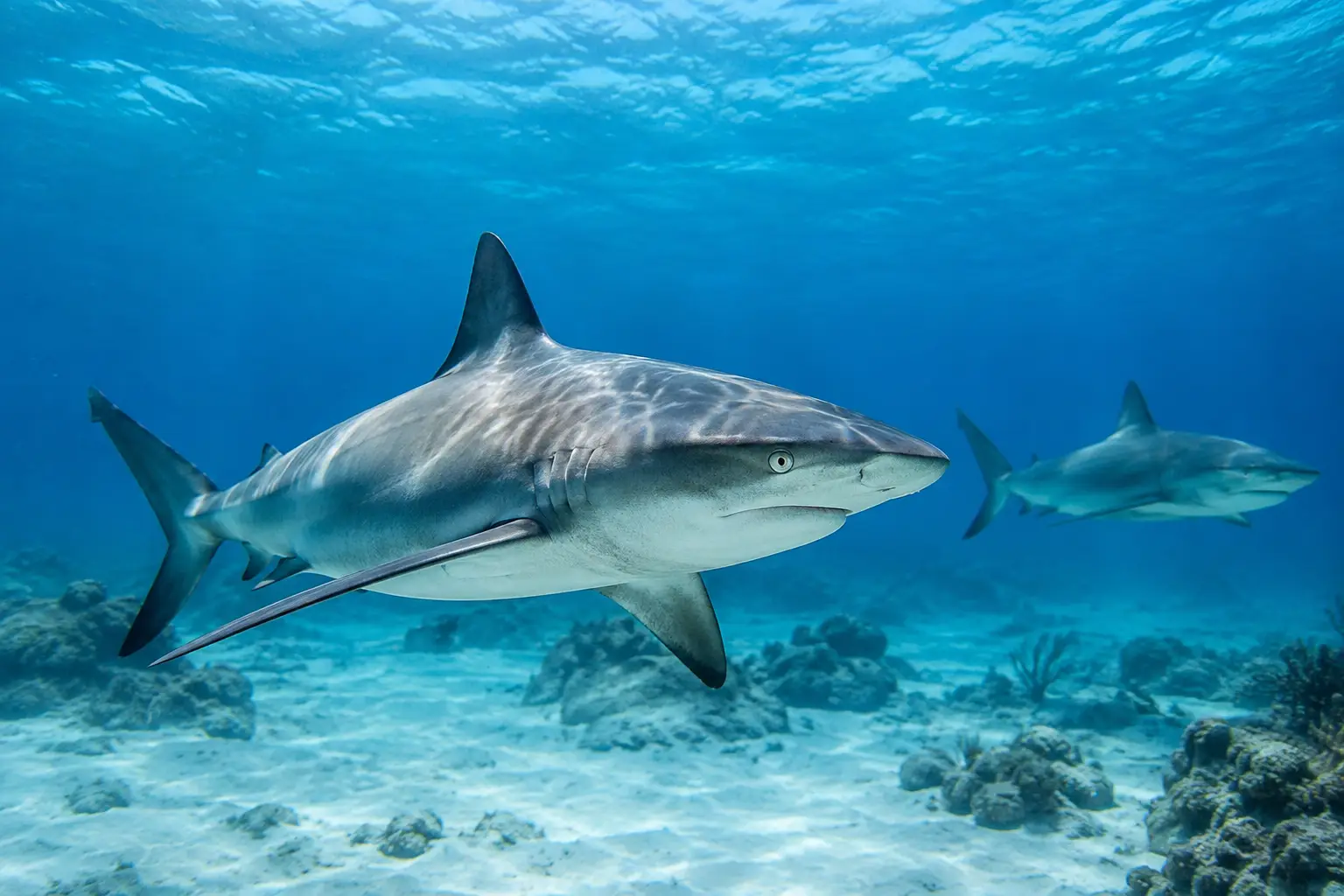
A shark silhouette appears at the edge of the blue, moves with quiet purpose, and is gone before the moment feels real. Encounters with Caribbean sharks are not about chasing an adrenaline rush. They are about witnessing an animal that has shaped the reef for millions of years, from a respectful distance, with a trained guide beside you and no crowd between you and the sea.
For many visitors to Punta Cana, seeing a shark underwater is the experience they talk about long after the vacation ends. It can also bring understandable nerves. The Caribbean’s sharks are far more often cautious than confrontational, and a well-run shark dive replaces movie myths with something much better: a calm, unforgettable look at the Caribbean Deep.
Why Caribbean Sharks Belong on Every Diver’s Wish List
Sharks are not just impressive animals. They are part of the reef’s operating system. As predators, they help maintain balance among fish populations, which supports healthier coral ecosystems over time. Seeing one on a dive is often a sign that you are visiting a marine environment with enough life, space, and food to support a top predator.
That does not mean every dive site produces a shark encounter, or that a sighting can be promised. The ocean is wild, and that unpredictability is part of its value. Conditions, season, visibility, current, and the sharks’ own behavior all affect what you see. A responsible operator will never guarantee wildlife or pressure an animal to come closer for a photo.
What can be promised is a thoughtful plan. The right site selection, briefing, group size, and guide attention make a major difference in how relaxed and rewarding the dive feels. This is especially true for divers who are curious about sharks but have never shared the water with one before.
Which sharks might you see?
The Caribbean reef shark is the species many certified divers hope to encounter around offshore reefs and shark-focused dive sites in the Dominican Republic. Sleek, gray, and built for open-water movement, it may cruise past at a measured distance, often appearing more curious about the environment than about divers.
Nurse sharks are another possibility in sheltered areas, reefs, and sandy zones. They are generally bottom-oriented and may rest beneath ledges or near structure during the day. Their slower movement makes them look very different from a reef shark, but they deserve the same space and respect.
You may also encounter other elasmobranchs, the group that includes sharks and rays. Southern stingrays, eagle rays, and occasional larger pelagic visitors add another layer of excitement to a Caribbean dive. Species vary by location and conditions, so the best mindset is to arrive with curiosity rather than a checklist.
Where to See Caribbean sharks Near Punta Cana
Shark Point is one of the best-known options for divers looking for shark encounters near Punta Cana. Its appeal is not only the possibility of seeing Caribbean reef sharks, but the sense of entering a different dimension of the local seascape: blue water, reef structure, and the anticipation that comes with looking beyond the coral.
The experience is usually best suited to certified divers, though the exact requirements depend on the site conditions and the day’s plan. Current can change the character of a dive quickly. A site that feels relaxed on one morning may require more confidence with buoyancy, descent, and finning technique on another.
That is why a personal assessment matters more than a generic label like “beginner” or “advanced.” A diver with a recent Open Water certification, good comfort in the water, and close guide support may be ready for certain shark-focused dives. Someone with more logged dives but little recent practice may benefit from an easier reef dive first. There is no prize for rushing. Confidence underwater is built one well-managed dive at a time.
At Scuba & Chill, small groups of up to four divers create room for that individual attention. Your guide can adjust positioning, check comfort, and make sure no one is left trying to keep up with a large group while processing a first shark sighting. The result feels more personal and is often safer too.
How to Behave When a Shark Appears
The best shark encounters are quiet ones. Your body language should communicate that you are an observer, not a threat, competitor, or object to investigate. Keep your movements measured, stay close to your buddy and guide, and maintain neutral buoyancy so you do not crash into coral or stir up the sand.
If a shark approaches, face it calmly and keep it in view without swimming directly toward it. Let the animal choose its route. Do not touch, feed, block, corner, or follow a shark. Even behavior that seems playful or harmless can disrupt its natural movement and create an unnecessary risk for both the animal and the diver.
Good photography follows the same rule. A wide-angle image that shows the shark in its environment is more meaningful than a close-up obtained by crowding it. Stay aware of your depth, air supply, and buddy rather than becoming absorbed by your camera. The encounter is the priority. The photo is only a bonus.
A proper pre-dive briefing should cover hand signals, entry and descent procedures, expected depth, current plan, and what to do if the group becomes separated. It should also make clear that the guide’s decisions are final if weather, visibility, or water conditions change. Flexibility is a safety feature, not a disappointment.
Is a Shark Dive Safe for First-Time Divers?
A first-time diver can have an extraordinary introduction to the Caribbean, but shark-specific sites are not automatically the right first underwater experience. The deciding factor is not fear alone. It is whether you can comfortably manage basic skills such as equalizing, breathing steadily, and following a guide while remaining aware of your surroundings.
For guests without certification, a Discover Scuba-style experience on a calm reef is often the smarter first step. It lets you learn how your body responds underwater in an easier setting, surrounded by colorful fish and coral. After that, PADI training can open the door to deeper exploration, more varied sites, and future shark dives.
Families should take the same patient approach. Young guests may enjoy age-appropriate programs such as Bubblemaker, while certified adults can choose an excursion that matches their experience. A great vacation adventure should stretch your comfort zone gently, never push you past it.
Respect Is Part of the Adventure
Sharks face pressure from fishing, habitat loss, and misinformation across the Caribbean. Their slow growth and relatively low reproductive rates mean that depleted populations can take a long time to recover. Tourism can either add pressure or help create value for living sharks and healthy reefs.
Choose operators who do not feed or handle wildlife, limit group sizes, maintain buoyancy standards, and speak honestly about conditions. Reef-safe habits matter too: avoid standing on coral, secure dangling equipment, and never take shells or marine life as souvenirs. These choices may seem small, but underwater they are visible.
The most powerful shift often happens after the dive. A shark stops being an abstract fear and becomes an individual animal moving through a real habitat. That perspective is worth carrying home.
If the thought of seeing a shark makes your heart beat faster, tell your instructor before the boat leaves. A good guide will not dismiss that feeling. They will help turn it into steady breathing, better awareness, and a moment in the blue that feels thrilling for all the right reasons.
Want to dive in the Dominican Republic?
Tell us your level, dates and what kind of experience you want. We will help you choose a dive, course or excursion.
Talk on WhatsApp