How to Prevent Underwater Ear Pain While Diving
Underwater ear pain can turn a perfect Caribbean dive into a hard stop. Learn why it happens, how to prevent it, and when to skip the water safely below.
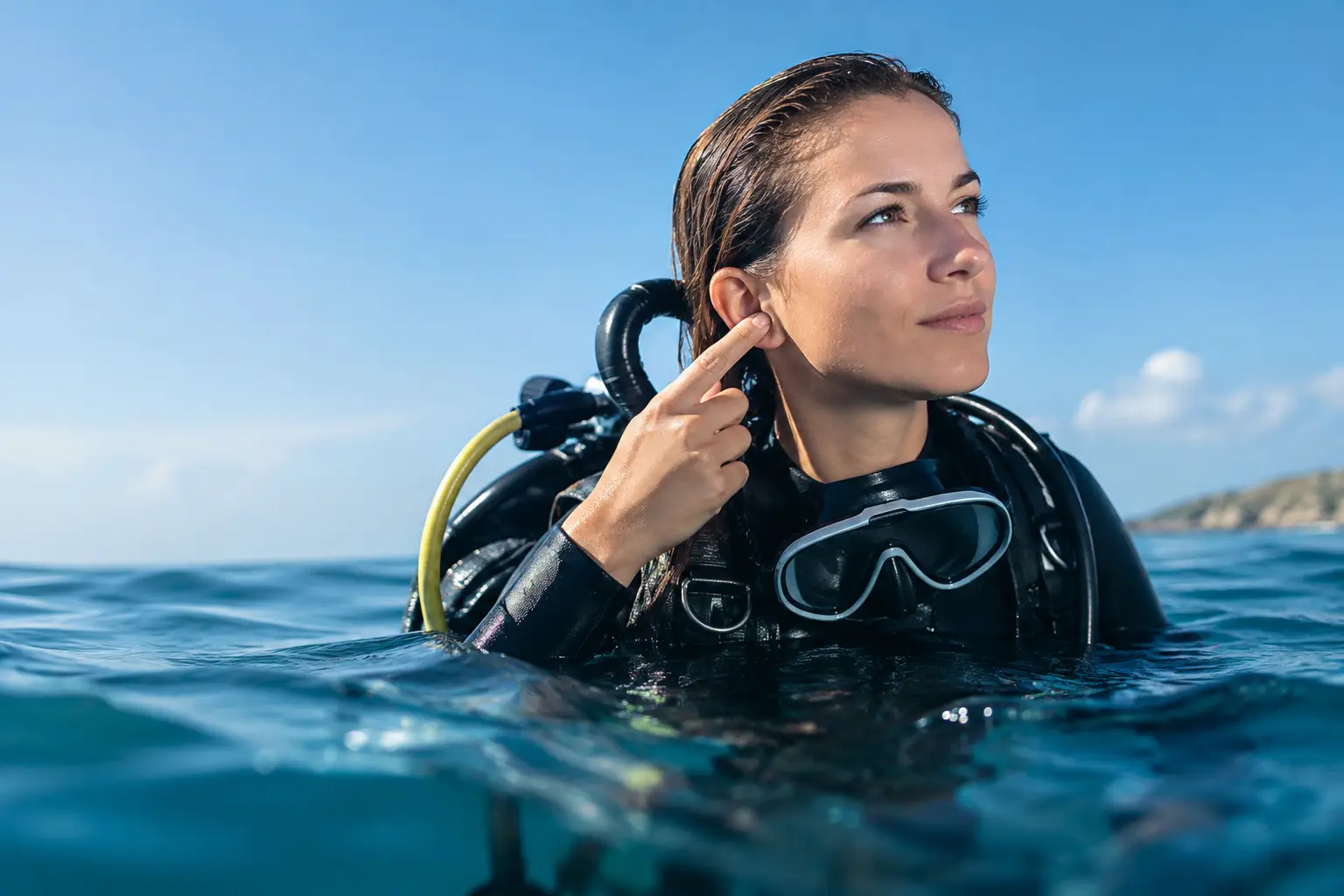
That sharp pinch on the way down is not something to “push through.” Underwater ear pain is your body’s early warning that pressure is not equalizing properly. In the Caribbean, where the water is warm, clear, and inviting, it can be tempting to keep descending so you do not miss the reef, wreck, or wall ahead. The smarter move is to pause, communicate with your guide, and protect your ears.
A comfortable descent should feel controlled, not painful. Whether this is your first guided ocean dive from Punta Cana or your fiftieth logged dive, understanding what your ears are telling you makes the entire experience safer and far more relaxed.
Why underwater ear pain happens
As you descend, the pressure of the water increases. The air space behind each eardrum must match that outside pressure. Your Eustachian tubes, the small passages connecting the middle ear to the back of the nose and throat, make this possible when they open.
If they do not open easily, the pressure difference pulls on the eardrum. At first, you may notice fullness, muffled hearing, or a mild squeeze. Descend farther without equalizing, and that sensation can become intense pain. This is called a middle-ear squeeze, or ear barotrauma.
The key detail is timing: pressure changes fastest near the surface. A few feet of descent at the start of a dive can create more trouble than a much greater change deeper down. That is why experienced divers begin equalizing before they feel discomfort and continue often during the first part of the descent.
Ear pain is not always caused by technique alone. Congestion from a cold, allergies, sinus irritation, dehydration, or a recent flight can make equalizing difficult. Earwax, ear infections, and individual anatomy can also play a role. Some divers equalize effortlessly on most days but struggle when their body is even slightly congested.
Prevent underwater ear pain before entering the water
Your best equalization starts well before the boat leaves the marina. Get adequate sleep, drink water, and be honest about how you feel. A stuffy nose may seem minor on land, but it can become a serious obstacle at 20 feet underwater.
Do not dive with a cold, active sinus congestion, an ear infection, or persistent ear pressure after a recent illness. This can be frustrating when you are on vacation with only a few days to explore the Caribbean, but skipping one dive is better than injuring an ear and losing the rest of your trip.
Avoid relying on decongestants as a quick fix unless a qualified medical professional has advised you to use them for diving. Medication can wear off during a dive and create a reverse block, meaning expanding air cannot escape the middle ear easily as you ascend. That can be painful too, and it is not a situation to force.
If you have recurring trouble equalizing, talk with a doctor familiar with dive medicine before your trip. A little planning can make a meaningful difference, especially for divers who want to complete a course or enjoy several days of guided dives.
Equalize early, gently, and often
The most reliable rule is simple: equalize before you need to. Try a gentle equalization at the surface, then again as soon as you begin descending. Continue every few feet, especially during the first 15 to 20 feet.
Many divers use the Valsalva maneuver: pinch the nose and blow very gently against it. The word “gently” matters. Blowing hard can irritate the ears and does not solve a blocked Eustachian tube. You may also swallow, wiggle your jaw, or make a yawning motion. Some divers find that tilting the head slightly, with the difficult ear facing upward, helps one side clear more easily.
There is no single technique that works best for every person. What matters is finding a method that feels natural, practicing it before the dive, and never waiting for pain. If one ear is slow, stop your descent, signal your buddy or instructor, and rise a few feet until the pressure eases. Then try again calmly.
A controlled descent line can be especially helpful for newer divers. It gives you a stable reference point, lets you pause without effort, and reduces the feeling of rushing. In small guided groups, your instructor can see whether you need more time rather than moving the whole group at an uncomfortable pace.
Never force a painful ear
If you cannot equalize after a few patient attempts, end the descent. Do not keep dropping lower hoping the problem will suddenly resolve. Do not forcefully blow, and do not continue because other divers have already reached the bottom.
Turning back is not failing a dive. It is good judgment. The reef will still be there tomorrow, and a personalized operation can often help you adjust the plan for another attempt when conditions are better for you.
What to do if ear pain begins underwater
The correct response depends on when the discomfort starts. On descent, stop immediately and ascend slowly a few feet. Give the ear time to recover, then equalize gently before deciding whether to continue. If pain disappears and your ears clear normally, you may be able to resume a very slow descent with frequent equalization.
If pain remains, becomes sharp, or is paired with dizziness, nausea, ringing, or hearing changes, abort the dive. Stay with your buddy or guide and ascend according to normal safe diving procedures. Tell the dive professional exactly what you felt and when it began.
Pain during ascent can point to a reverse block. Slow down if possible, signal your guide, and avoid aggressive attempts to equalize. In some cases, a brief pause may allow trapped air to escape naturally. Your guide can help manage the ascent while keeping you within safe diving practices.
After the dive, keep water out of the ear if it feels sore and avoid diving again until symptoms are fully resolved. Do not insert cotton swabs or other objects into the ear canal. If you have continued pain, fluid or blood from the ear, vertigo, significant hearing loss, or symptoms lasting more than a short time, seek prompt medical evaluation. For severe dizziness or sudden hearing changes after diving, treat it as urgent.
Ear discomfort outside the middle ear
Not every ache is a pressure injury. Swimmer’s ear, an infection of the outer ear canal, may cause pain when you touch or pull the outer ear. It can occur after repeated time in water, particularly if moisture stays trapped in the canal. Middle-ear pressure problems usually feel deeper and are more closely connected to descending or ascending.
The distinction matters because the right treatment is different. Do not self-diagnose an infection or assume that ear drops are suitable after a pressure injury. If there is any possibility of an eardrum injury, get medical advice before putting drops in your ear.
A better descent changes the whole dive
Great diving is never about getting to the bottom first. It is about arriving calm enough to notice the parrotfish on the reef, the silhouette of a wreck, or the slow movement of a turtle above the sand. A relaxed start also saves air and helps you settle into your breathing rhythm.
At Scuba & Chill, small groups give divers room to descend at a pace that respects their comfort and training. That personal attention is particularly valuable for beginners, returning divers, and anyone who knows their ears need a little extra patience.
Before your next Caribbean dive, make one agreement with yourself: pain is your signal to stop, not your signal to try harder. Take the extra minute at the surface, equalize early, and let the Caribbean Deep reveal itself on your body’s terms.
Want to dive in the Dominican Republic?
Tell us your level, dates and what kind of experience you want. We will help you choose a dive, course or excursion.
Talk on WhatsApp