Is Diving Safe After Flying? What to Know
Is diving safe after flying? Learn how fatigue, dehydration, ear pressure, and medical factors can shape a safe first day of Caribbean diving for visitors
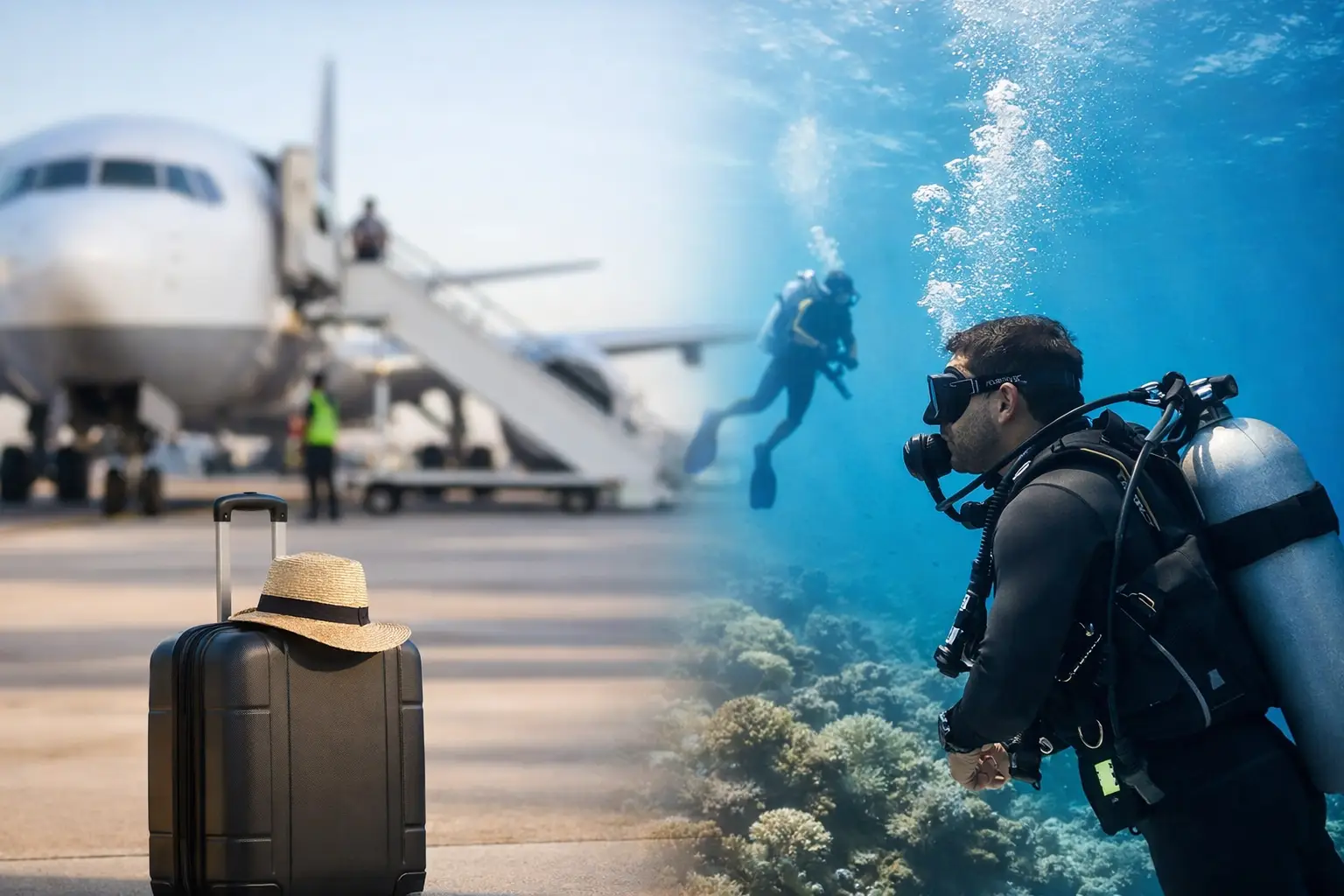
You land in Punta Cana, see that unmistakable Caribbean blue from the road, and immediately start thinking about reefs, wrecks, and the quiet world below the surface. But is diving safe after flying? For most healthy divers, yes: flying to your destination does not create the same decompression concern as flying after a dive. Still, a safe first dive depends on how you feel after the journey, not simply on what the calendar says.
A long flight, an early airport transfer, celebratory drinks, poor sleep, and the tropical heat can leave even experienced divers less prepared than they realize. The good news is that with honest self-assessment, hydration, and a conservative plan, your first day in the Caribbean can be both safe and unforgettable.
Is diving safe after flying if you feel well?
In general, diving after arriving on a commercial flight is considered safe. The concern many travelers have heard about is actually the reverse: flying after scuba diving. After a dive, your body needs time to release absorbed nitrogen before being exposed to the lower pressure of an aircraft cabin. Before diving, that nitrogen-loading issue does not apply in the same way.
That does not mean every arrival day is automatically a green light. A flight can affect the things that matter during a dive: hydration, energy, alertness, and your ability to equalize your ears and sinuses. If you arrive rested, hydrated, clear-headed, and free of congestion, a relaxed reef dive may be a great way to begin your vacation.
If you arrive exhausted after an overnight flight, have a pounding headache, feel dehydrated, or cannot clear your ears comfortably, waiting until the next morning is often the smarter choice. The reef will still be there. A good dive should feel calm and exciting, not like another item to force into an already demanding travel day.
The real issue: how flying affects your dive readiness
Dehydration can sneak up on you
Airplane cabins are dry, and travel days often involve more coffee, less water, salty airport food, and alcohol. Dehydration does not automatically make diving dangerous, but it can contribute to fatigue, headaches, and feeling generally unwell. Those are not ideal conditions for handling equipment, following a guide, or staying aware underwater.
Start rehydrating as soon as you land. Drink water steadily rather than trying to fix everything with one large bottle at the last minute. A light meal and time in the shade can also make a meaningful difference before entering warm Caribbean water.
Fatigue changes your margins
Scuba diving is relaxing once you settle into the rhythm of breathing, but it still requires focus. You need to listen to the briefing, check your gear, monitor your air, communicate with your buddy or guide, and respond calmly if something feels different than expected.
Travel fatigue can make simple tasks feel slower. It can also tempt people to rush because they do not want to lose a vacation day. For an arrival-day dive, choosing an easy site, staying shallow, and diving with a small, attentive group gives you more margin than jumping straight into a deep wall or wreck penetration.
Ear and sinus pressure deserve respect
The pressure changes during a flight can irritate ears and sinuses, particularly if you traveled with allergies, a cold, or nasal congestion. Then, on descent during a dive, you must equalize early and often. If your ears do not clear easily on land or while gently descending, do not push through pain.
Never force an equalization. Stop, signal your guide, ascend slightly, and try again slowly. If it still does not work, ending the dive is the right call. A missed dive is disappointing; an ear injury can affect the rest of your trip and your flight home.
When should you postpone your first dive?
You do not need to be perfect to go diving, but you should be genuinely fit to dive that day. Postpone if you have significant congestion, ear pain, fever, chest symptoms, dizziness, nausea, unusual shortness of breath, or a migraine that affects your concentration.
The same applies if you are heavily jet-lagged, have had very little sleep, or drank enough alcohol the night before that you are not fully recovered. Feeling “mostly fine” is not the standard for a technical activity in the ocean. You want to feel alert, comfortable, and ready to enjoy it.
Divers with a recent illness, surgery, heart or lung condition, pregnancy, diabetes management concerns, or any question about medication should seek guidance from a qualified physician familiar with dive medicine. Your dive professional can assess practical conditions at the dock, but medical clearance belongs with a medical professional.
A smart arrival-day plan in Punta Cana
The best plan depends on your flight schedule and experience level. Someone arriving early after a short, restful flight may be comfortable with an afternoon shallow reef dive. A traveler arriving late after a red-eye may be better served by a relaxed beach day, a good meal, and a morning dive when their body has caught up.
For newer divers, the first dive of a trip is also a chance to reacquaint yourself with the basics. Review hand signals, practice a calm regulator recovery if needed, and take your first descent slowly. Even certified divers can be rusty after time out of the water, and there is no prize for pretending otherwise.
At Scuba & Chill, small groups make this kind of adjustment easier. With no more than four guests, an instructor can take time with equalization, buoyancy, and pre-dive questions instead of moving everyone at the pace of a crowded boat. That personal attention matters whether this is your first ocean dive or your hundredth.
Choose the right kind of dive for day one
Your first day is not always the moment to chase the deepest profile on the schedule. A colorful, shallower reef can be the perfect introduction to the Caribbean: warm water, gentle movement, time to refine buoyancy, and plenty to see without unnecessary pressure.
More demanding sites can wait until you are rested and settled. Walls, deeper wrecks, currents, and shark-focused dives may be excellent options for qualified divers, but they ask more of your awareness and comfort level. A responsible operator will help match the site to your certification, recent experience, and how you are feeling that day.
This is not about reducing the adventure. It is about building toward it. When you begin comfortably, you are more likely to enjoy the entire trip, from the first reef fish flashing over coral to the final ascent of your last dive.
Do not confuse diving after flying with flying after diving
This distinction is essential when planning your vacation. Diving after a flight is usually fine when you are physically ready. Flying after a dive requires surface time because of decompression risk.
Common training guidance recommends waiting at least 12 hours before flying after a single no-decompression dive. For multiple dives over several days, or dives requiring decompression stops, the suggested wait is typically at least 18 hours. Some divers and professionals choose to leave even more time, especially after demanding profiles. Follow your training agency’s current recommendations, use a conservative dive computer plan, and tell your dive team when you need to fly home.
That final day should be planned with as much care as your first. A morning flight and a late-afternoon dive the day before may not be compatible, even if you feel completely normal. Decompression illness is not something you can reliably judge by how energetic you feel.
A quick check before you get on the boat
Before committing to an arrival-day dive, ask yourself four honest questions: Did I sleep enough? Have I had water and food? Can I equalize without discomfort? Am I mentally present and excited rather than pressured?
If the answer is yes, you can likely enjoy a beautiful first immersion. If one answer is no, speak up. A professional team would always rather adjust the schedule than ask you to ignore what your body is telling you.
The Caribbean Deep is best experienced with a clear head, comfortable ears, and enough energy to look up from the reef when a sea turtle glides past. Give yourself that margin, and your first dive after flying can feel less like a rushed arrival and more like the moment your vacation truly begins.
Want to dive in the Dominican Republic?
Tell us your level, dates and what kind of experience you want. We will help you choose a dive, course or excursion.
Talk on WhatsApp