Wreck Diving in Punta Cana: What Makes It Worth It
Wreck diving in Punta Cana pairs history, coral, and clear Caribbean water. Learn who can go, what to expect, and how to plan a safe, personal dive today.
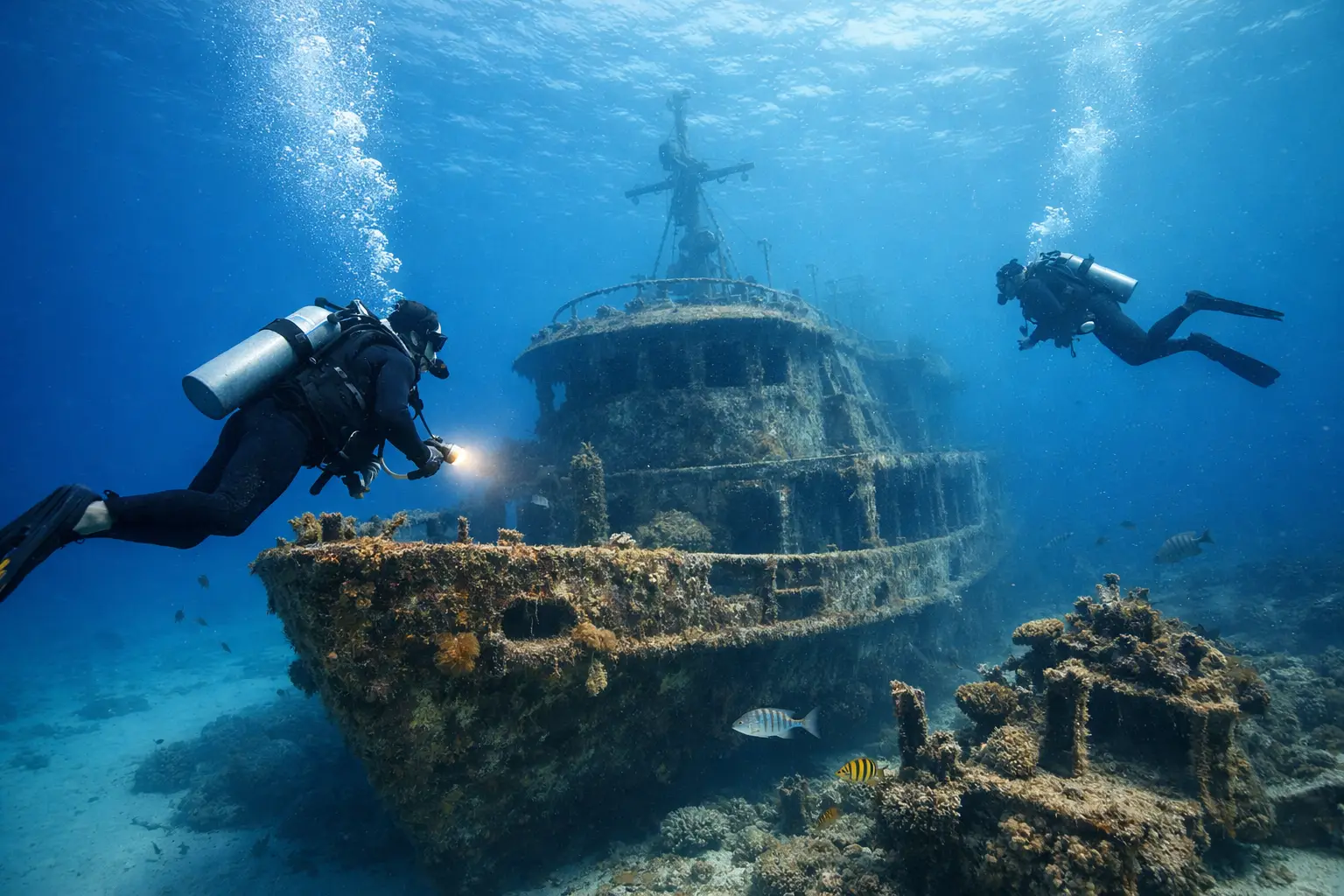
A shipwreck is never just a sunken object. One moment you are descending through clear Caribbean blue; the next, a hull appears below you, softened by coral and surrounded by schools of fish. Wreck diving in Punta Cana offers that rare combination of adventure, history, and marine life, with sites that can feel completely different depending on the light, the current, and your experience level.
For certified divers, a wreck is an invitation to look closer. For newer divers, it can be a powerful reason to continue training. The right experience is not about racing to the deepest point or squeezing through every opening. It is about exploring with control, curiosity, and a guide who knows when to slow down.
Why wreck diving feels different
Reef dives are alive with movement, color, and changing textures. A wreck adds structure to that living landscape. Its railings become shelter for fish, its surfaces become home to corals and sponges, and its shadowed sections create a sense of scale that no natural reef formation can quite replicate.
There is also a human story beneath the surface. Some wrecks were working vessels before being intentionally sunk as artificial reefs. Others carry the visual character of time underwater: metal softened by marine growth, openings framed by sea fans, and decks that now belong to angelfish, barracuda, and curious schools of grunts.
That contrast is what makes a good wreck dive memorable. You are not visiting a museum preserved behind glass. You are witnessing how the sea reshapes what people leave behind.
Wreck diving in Punta Cana: the sites that stand out
The Punta Cana area gives certified divers access to several styles of wreck exploration. Conditions, routes, and site availability can vary with weather and sea state, so the best choice depends on your certification, recent diving experience, and comfort in the water.
St. George Wreck
The St. George is one of the Caribbean’s most recognizable wreck dives and a highlight for divers looking for a dramatic, full-scale structure. This former cargo ship rests in deeper water, where its long profile, open deck areas, and marine growth create an impressive scene from the first descent.
Because of its depth and size, the St. George is best suited to experienced certified divers who are comfortable with buoyancy, air management, and deeper dive profiles. It rewards patience. Rather than trying to see every section in one dive, take time to notice the details: the coral beginning to claim the steel, the fish gathering along the hull, and the way sunlight shifts across the structure.
Atlantic Princess
The Atlantic Princess offers a different mood. Smaller and often more approachable than a large cargo wreck, it can be an excellent option for divers who want a focused wreck experience without the same sense of scale or depth commitment.
Its structure creates natural habitat for reef life, and the surrounding water can offer beautiful visibility. Depending on conditions, divers may see schools of snapper, trumpetfish, rays in the sand nearby, or larger visitors moving through the blue beyond the wreck.
Who can go wreck diving?
Most wreck dives require an open-water scuba certification at minimum, but that does not mean every certified diver should choose every wreck. Certification is your starting point. Recent experience, confidence with buoyancy, and comfort at depth determine which site will feel enjoyable rather than overwhelming.
If you have not dived in a while, a relaxed reef dive or refresher before a wreck excursion can make a major difference. The goal is to arrive at the wreck calm, properly weighted, and ready to enjoy your surroundings. A private or small-group format is especially valuable here because the pace can match your needs instead of the schedule of a crowded boat.
For divers interested in entering a wreck, additional training matters. Penetration diving involves overhead-environment risks that are very different from swimming around the exterior. You need specialized instruction, redundant planning, careful navigation, and a strict respect for limits. Many of the best wreck dives happen outside the wreck anyway, where natural light, marine life, and wide-angle views are at their best.
What makes a wreck dive safe and enjoyable
A great wreck dive starts before the boat leaves shore. Your guide should review the plan clearly: maximum depth, expected bottom time, current conditions, entry method, signals, and the route around the structure. This briefing is not a formality. It helps everyone in the group make sound decisions once underwater.
Buoyancy is the skill that matters most. Wrecks have fragile coral growth, sharp edges, fishing line hazards, and narrow spaces where poor control can damage the environment or create stress. Maintain a respectful distance from the structure, secure every hose and accessory, and avoid touching the wreck even when it looks solid. Marine growth can be delicate, and old metal can be unpredictable.
Good air management is equally important. Wrecks naturally attract attention, and it is easy to spend too long photographing a deck, following a school of fish, or watching a barracuda hover near the bow. Check your pressure gauge regularly and follow the turnaround pressure set during the briefing. The return is part of the dive, not an afterthought.
Current can change the experience, too. A gentle current may bring excellent visibility and active fish life. Stronger conditions may call for a more conservative route, a shorter dive, or choosing another site altogether. That is not a disappointment. It is smart Caribbean diving.
What you might see around a Caribbean wreck
Wrecks act as artificial reefs, providing surfaces where marine life can settle and places where fish can hide, hunt, and rest. You may find French angelfish gliding close to the hull, spotted moray eels peering from openings, and sergeant majors moving in bright groups above the deck.
Look into the blue as often as you look at the wreck. Barracuda, jacks, and occasional eagle rays may pass beyond the structure. On the sandy bottom, southern stingrays sometimes rest near the edges of the site. The exact encounter is never guaranteed, which is part of the appeal. Every descent writes a slightly different version of the same story.
For photographers, wrecks offer strong lines and dramatic perspective. The challenge is balancing the ambient blue water with the darker structure. Stay close to your buddy, avoid finning up sediment, and choose one or two scenes rather than trying to photograph everything. A single diver silhouetted near a coral-covered rail can say more than a crowded frame.
How to prepare for your wreck dive
Bring your certification card, logbook or digital proof of certification, swimwear, sunscreen for before and after the trip, and a light layer for the ride back. Avoid alcohol the night before, hydrate well, and get a proper night’s sleep. These simple details affect comfort, focus, and air consumption more than many divers realize.
If you use prescription lenses, ask in advance about mask options. If you have a medical condition, are taking medication, or have had a recent illness, be honest with the dive team before booking. The most personalized service is built on accurate information, not on pushing through concerns.
At Scuba & Chill, small groups of up to four divers make it easier to provide individual attention, adjust the pace, and keep the experience relaxed without compromising professional standards. Certified PADI instructors, complete equipment, and transportation from Bávaro remove much of the vacation logistics, leaving you free to focus on the adventure below the surface.
Choose the wreck that matches your day
The best wreck is not always the deepest or most famous one. If you are newly certified, a site with a manageable profile and a calm guide-led route may give you more confidence and better memories. If you are an advanced diver with recent experience, a larger and deeper wreck can offer the scale and challenge you came for.
Be open about what you want from the dive. Maybe you are hoping for a dramatic ship silhouette, a relaxed photography session, a private trip with your partner, or simply a new kind of Caribbean memory. A thoughtful dive plan can turn those expectations into a safer, more personal experience.
The wreck will still be there tomorrow. Take your time, breathe slowly, and let the Caribbean reveal it one detail at a time.
Want to dive in the Dominican Republic?
Tell us your level, dates and what kind of experience you want. We will help you choose a dive, course or excursion.
Talk on WhatsApp